


Botswana
November 3 to 18, 2025
1st part - Moremi Game Reserve and Khwai

Sunday november 2nd : with our friends Etienne and Stephane, we arrive at Roissy Charles de Gaulle airport around 1:30 p.m. At the Air France counter, we check in our luggage and place it on the conveyor belt. Our suitcases weigh 12 and 13 kg. We board an Airbus A350 at 4:05 p.m. Takeoff is at 5:00 p.m. Dinner is served at 6:30 p.m. We try to sleep.
Monday november 3rd : breakfast is served at 3 am. After a 11h30 flight, we arrive in Cape Town in South Africa at 4:30 am (french time) - 5:30 am (local time). Strangely, we have to go through customs (passport stamping at arrival) and collect our luggage. We then have to go to Air Link counters to check it in again. We go through security and passport controls (passport stamping at exit !). We then head to the boarding gate. We wait, it's long ! Around 10 am, we take a bus to board on the tarmac. Take off is at 10:30 am.
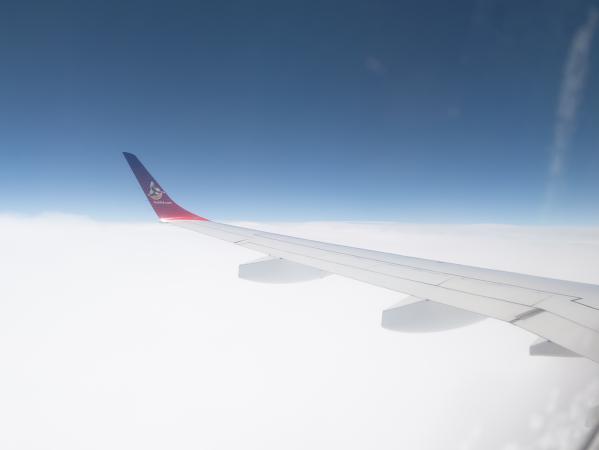
At around 11:15 a.m., a light meal is served. We arrive in Maun, Botswana, at 1:05 p.m., after a 2h30 flight. We go through immigration and have to fill out a form. The guy asks us a lot of questions about our itinerary. We collect our luggage and meet up with the guy from Cresta Riley's Hotel. We get our rooms at 2:00 p.m.
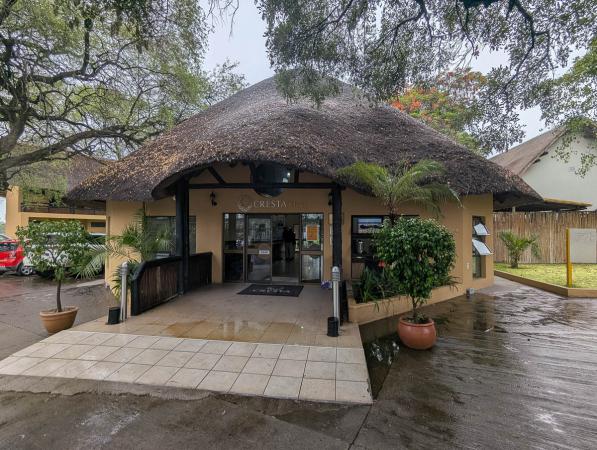
It's a shame it's raining; we can't enjoy the pool.
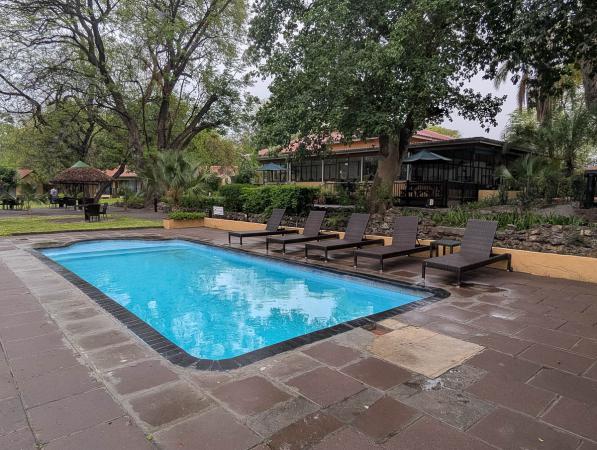
We rest a little and have dinner at 6:30 pm at the hotel restaurant : pizzas (a little too greasy).
Tuesday november 4 : Up at 6:00 a.m., breakfast at 6:30 a.m. in the hotel restaurant. Our driver-guide from Kalahari Skies (Let's Go Travel's service provider for this trip) picks us up at the hotel at 8:15 a.m. to start the safari. His name is Newman, like Paul, he tells us! The 4x4 is a Land Cruiser with a bench seat and four seats, a sunroof, and large windows that open fully to the outside.
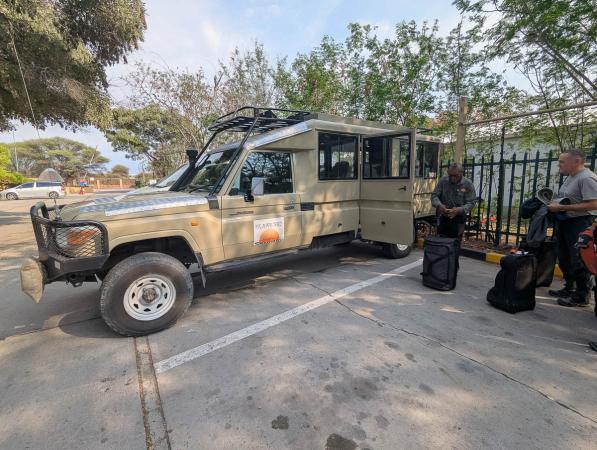
We leave Maun heading north towards Moremi Park. Newman tells us it will take three hours to reach the park gate and another two hours to get to the camp. On leaving Maun, we pass a few huts and farms with goats and donkeys. The vegetation on the ground is scorched, as are the trees. At the end of the paved road around 9:20 a.m., we deflate the tires. We hit the dirt roads and the ride gets bumpy! We hear our first cicadas. After a while, the road splits in two. We take the right fork towards Moremi/Khwaï. The vegetation is greener here. We begin to see southern yellow-billed hornbills (they have orange beaks), impalas,
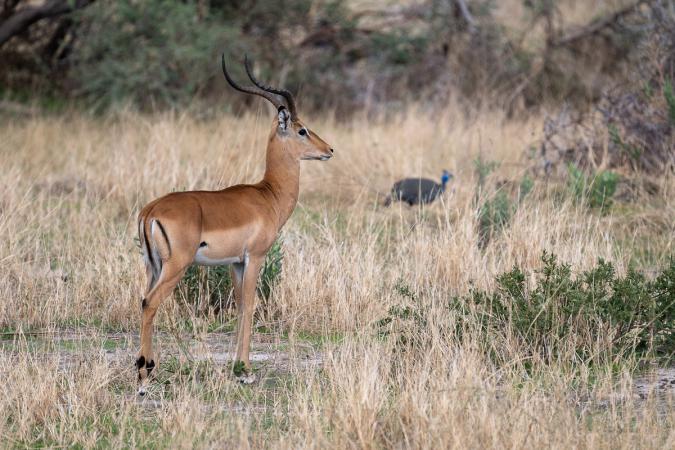
helmeted Guineafowl, a lizard, giraffes and southern ground hornbill. Everyone flees as the 4WD approaches! At 11:50 a.m., we pass through the entrance to Moremi Game Reserve via the South Gate.
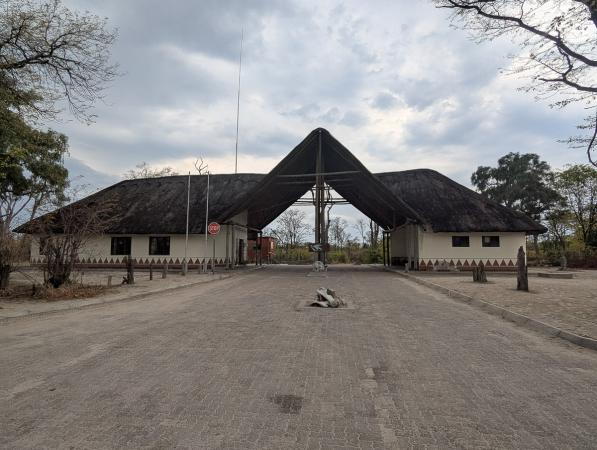
We stop to eat in the bush (dense bushes and isolated trees) around 12:30 p.m.: homemade pasta salad, Boursin-style cheese, sandwich bread, clementines, tea, coffee, and strawberry cookies. All this in the rain with an elephant calmly passing by 15 meters away from us! We set off again around 1:30 p.m. in pouring rain and thunderstorms. We closed the windows. Despite everything, we took a few photos by sliding the windows open a little to take photos/videos of giraffes, impalas,
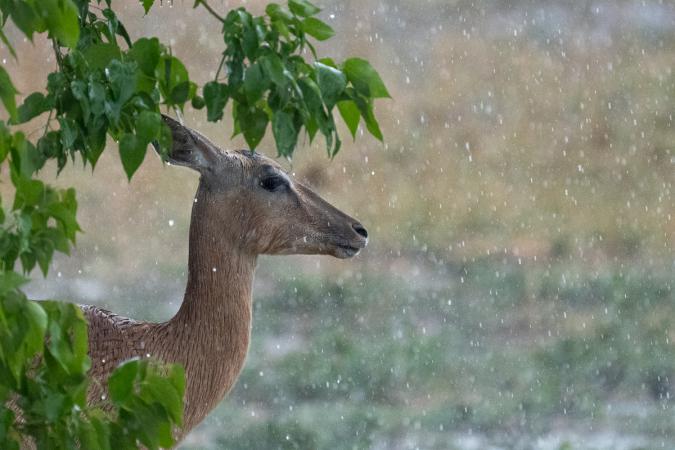
kudus, yellow billed stork, stork, marabou stork, wildebeests, zebras. We drive past a campsite. Our driver stops to chat with the campsite guide. He turns around. Um... why? He tells us he's going to check something out. And we come across... a leopard! Great find, awesome! It's at the foot of a tree, grooming itself.
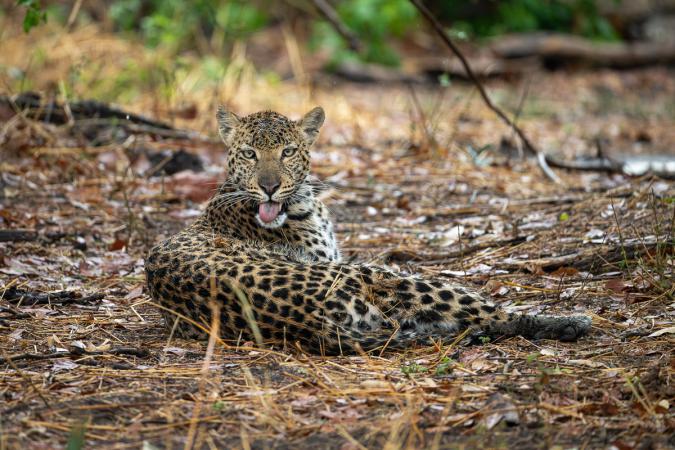
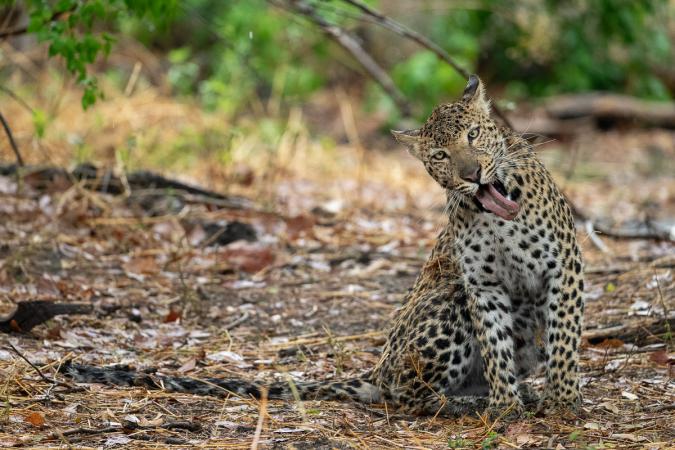
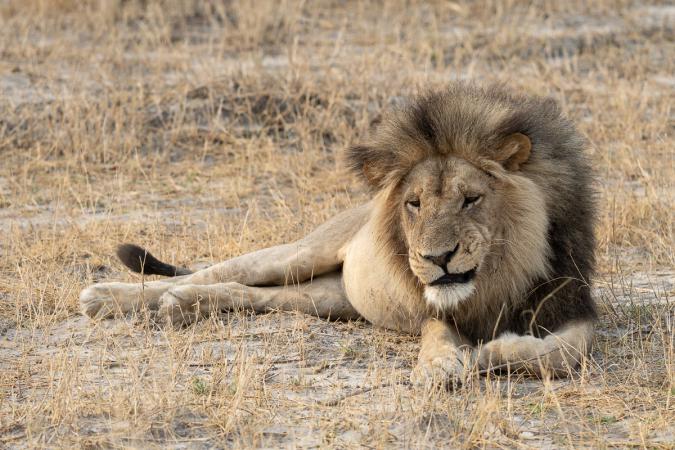
We watch it for at least an hour. We continue on our way and see marabou storks, a jackal, a hyena, and a group of lionesses with their male. This is the Xini Pride (if I understood the name correctly): 12 lionesses/cubs and 4 males.
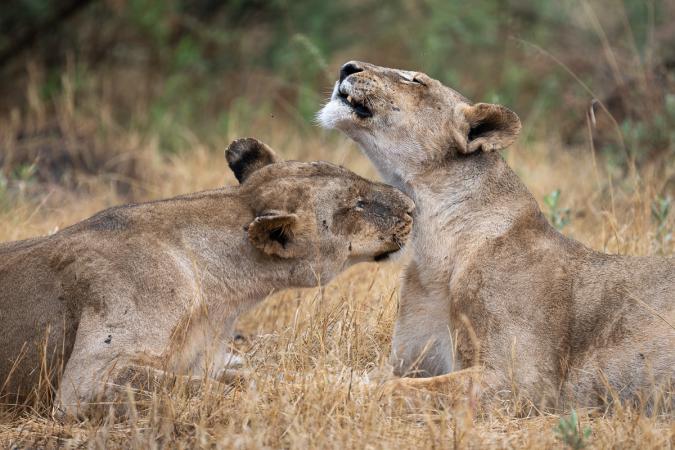
The lion has a perfect blow-dried hair !
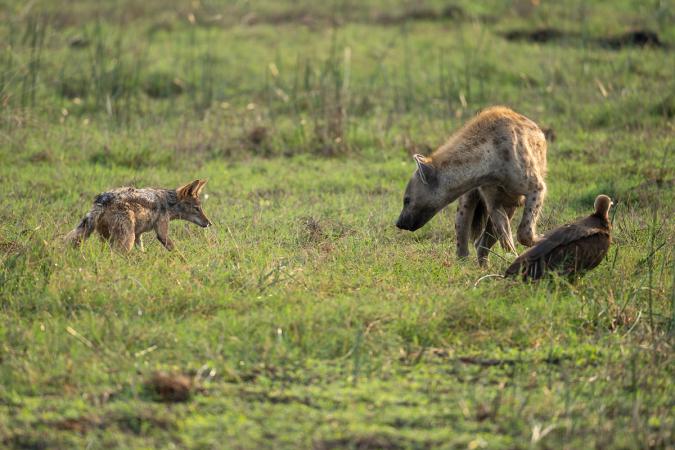
We stay for a while, but they aren't very active—they're sleeping! We leave these lazybones and come across a hyena and a jackal feeding on a zebra carcass. Then a marabou stork and some vultures arrive. All the scavengers are here!
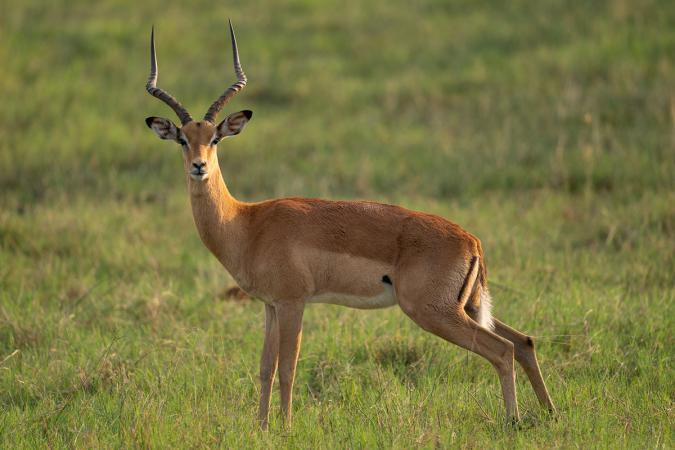
An impala poses for us.
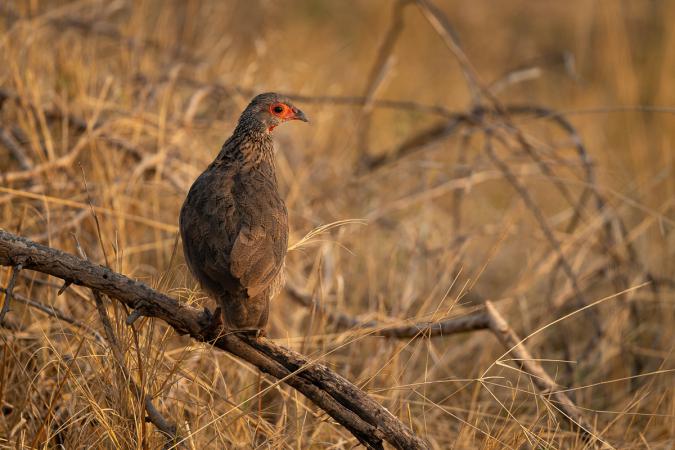
Egyptian goose, great egret, red-necked spurfowl show themselves to us before we arrive at camp.
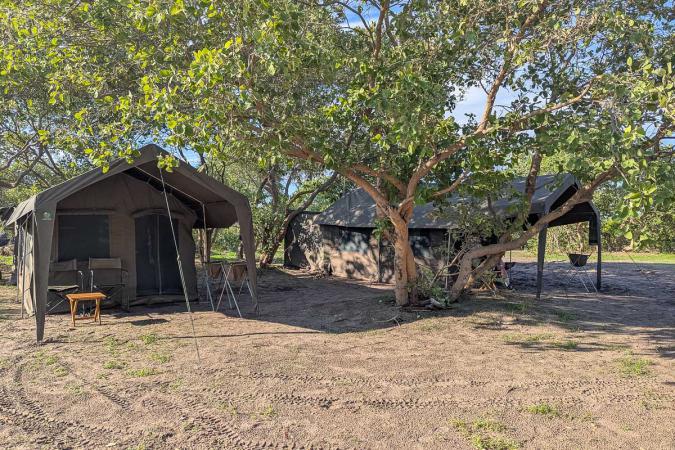
We finally arrive at 5:45 p.m. We are greeted by the four guys who make up the camp staff (a steward named Dicks, two cooks named Drims and Lorato, and an assistant named Sindi). Dicks brings us some cool wipes, which feel amazing! The camp is set up in the forest. It consists of a “dining room” tent and two tents for the four of us
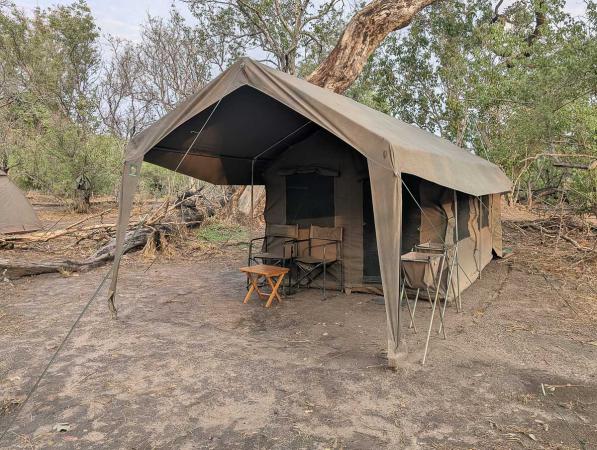
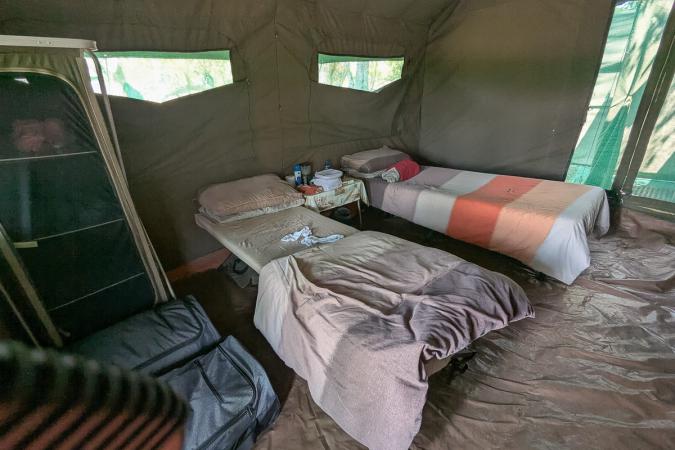
and slightly apart from the staff tents. Our sleeping tents are equipped with two camp beds with warm duvets, a small bedside table, and a wardrobe with mosquito netting. At the rear, there is a shower
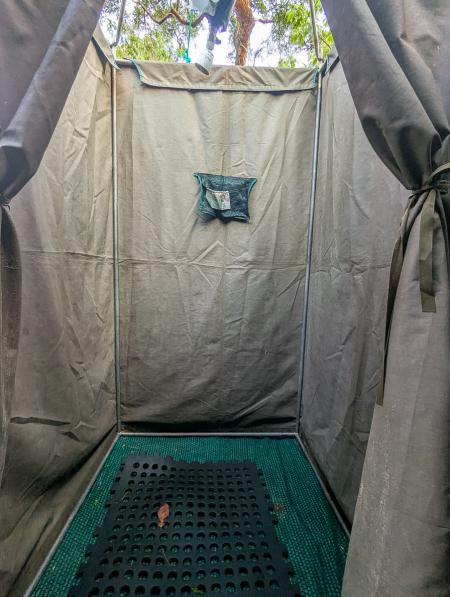
and toilets dug into the ground.
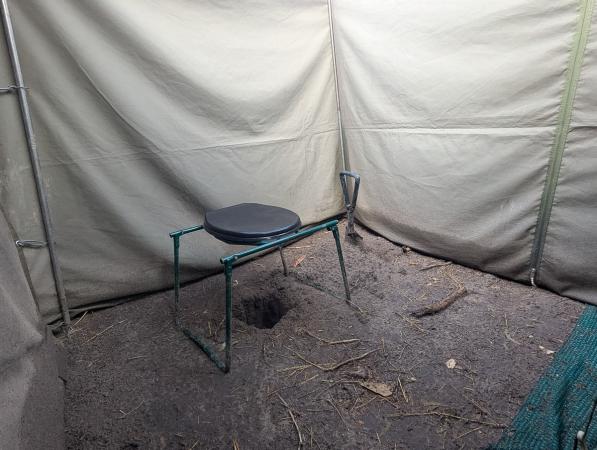
At the front, there are two camping chairs, a small table, and two “sinks.” It's basic, but it suits us just fine! Dicks lights a campfire, sets up the chairs around it, and serves us an aperitif at 6:30 p.m. At 7:00 p.m., he announces the menu: tomato soup, chicken with rice and vegetables, and banana dessert with custard and chocolate. It's very good. We dine by candlelight and solar lamps. The downside is that it attracts all kinds of weird and large insects: cicadas, termites, dung beetles. Yuck! We have to check our glasses before drinking! Bedtime at 8:30 p.m. There's nothing else to do!
Wednesday november 5 : We had a good night's sleep despite some lion roars and hippopotamus laughter! We got up at 5:10 a.m., had a light breakfast (coffee, tea, hot chocolate, cookies), and left for safari at 5:50 a.m. (and it will be like this every day). We drive north.
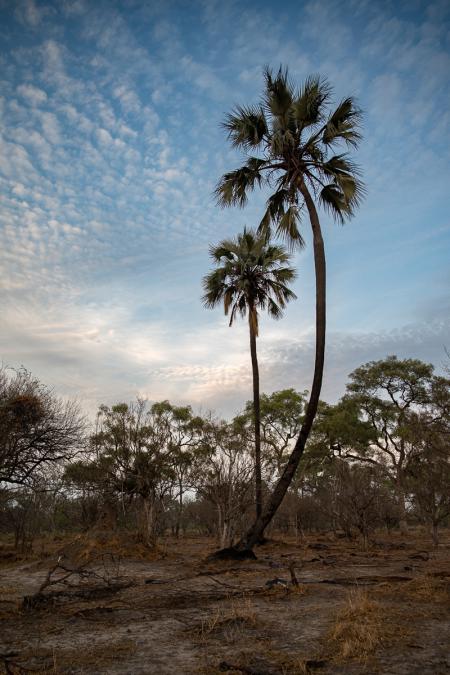
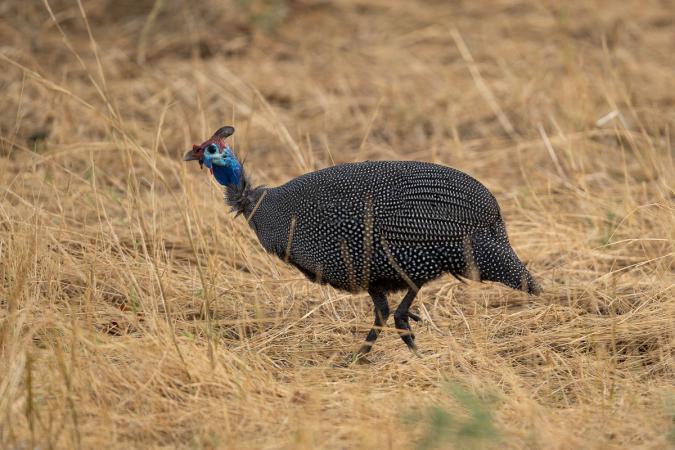
We encounter a giraffe, marabou storks, impalas, francolins, monkeys, zebras, a helmeted guinea fowl,
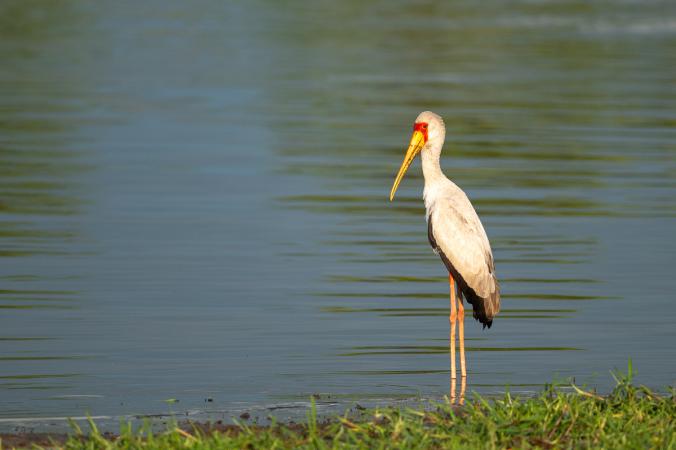
a warthog, a fish eagle. We stop for a “real” breakfast around 8:00 a.m. in front of a pond. We enjoy bread with jam, yogurt, fruit in syrup, muesli, muffins, fruit juice, coffee, or tea. Meanwhile, a yellow-billed stork lounges at the water's edge.
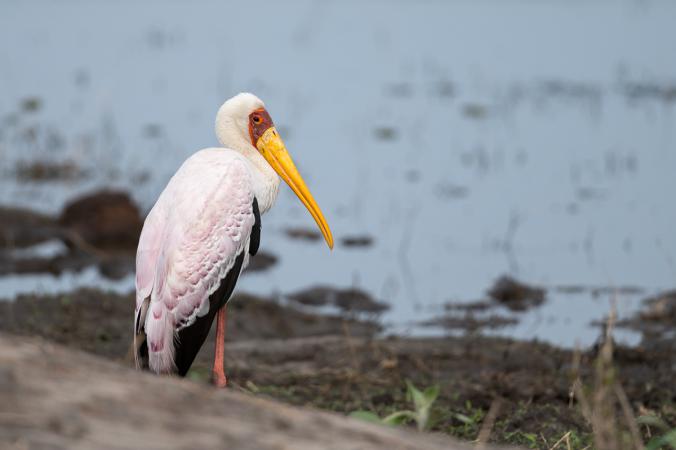
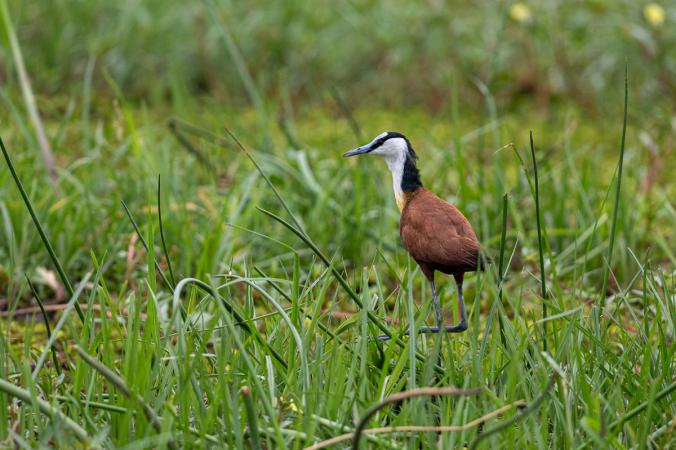
These large birds are beautiful. We also see an african jacana. A little further on, there are impalas splashing around. Ah, a hamerkop, then a warthog. Back at the water's edge, we see pied kingfishers. They are black and white.
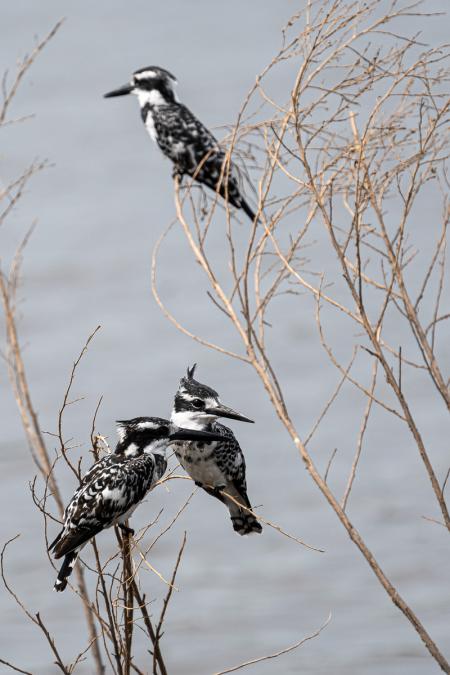
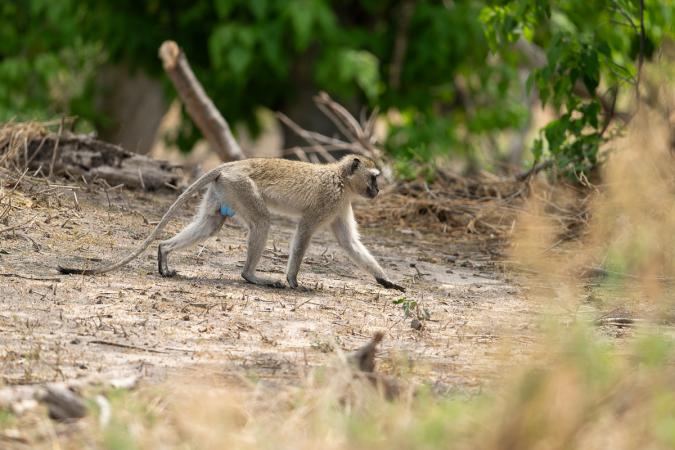
They chirp, they fly, they go fishing... We go back into the bush a little and come across a vervet monkey. This one is funny, it has blue attributes!
In an area with slightly less vegetation, we see zebras in the golden savannah. In the tree next to us, a Burchell's starling sings. It is black with blue-violet highlights. Meanwhile, a southern ground hornbill pecks at the ground. Suddenly, we come across a leopard. According to Newman, it is the same one as yesterday. Unfortunately, it hides in the bushes. We start heading back to camp for lunch, but first we come across a saddle-billed stork and a roller. We return to camp around 11:45 a.m. and sit down to eat at noon: tomato salad, cheese, and moussaka. Very good. Lunch will always be just a main course and a side dish. Because at tea time around 3:15-3:30 p.m., cake will be served. Today: almond cake. Before that, we take our showers. Sindi pours two jugs of hot water into our cold water tanks in the showers. We have to save water for the second person to shower because there is only 5 liters per person. Some people take a nap, but it is hot in the tents.
After cake, we set off on safari again at 3:45 p.m., heading southeast. Squacco herons, long-toed lapwings, cattle egrets, and Senegal coucals grace the start of our safari. Next, we spot a giraffe and an Egyptian goose. Further on, in an open area of the bush, we find the same pride of lions as yesterday. There are nine lionesses and five cubs, sprawled out! Then they start to wake up a little.
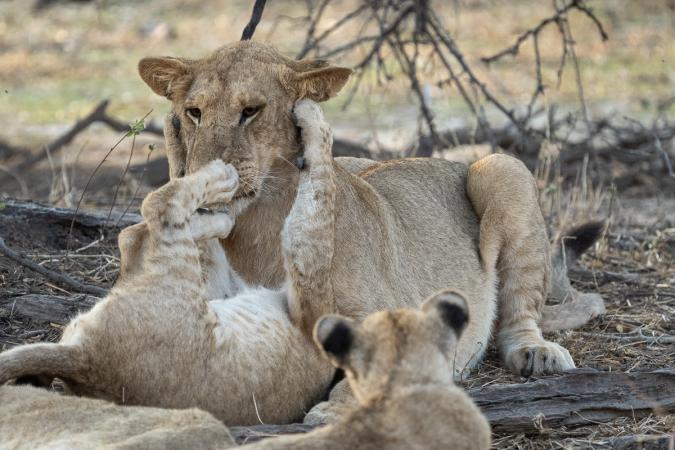
The young play fight, chase each other, and try to climb trees.
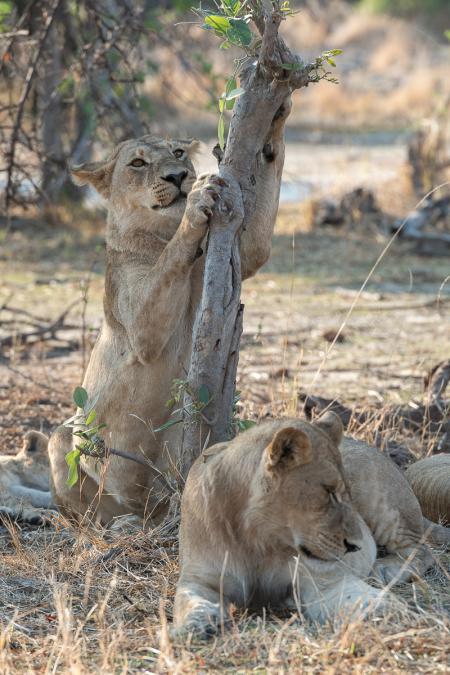
We spend at least an hour and a half watching them. Then we quietly return to camp at 7:00 p.m. The campfire is lit, and chairs and appetizers await us! Tonight's menu features mushroom quiche, fish, potatoes, vegetables (cauliflower, carrots, cheese), and dessert.
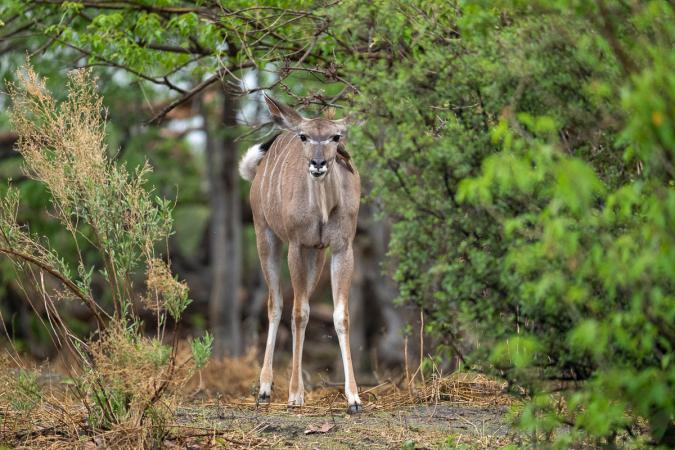
Thursday november 6 : lions roared three times during the night, and at 4:00 a.m., a storm broke out with rain. We left at 5:45 a.m. heading northeast. The rain stopped. Monkey, Senegal coucal,
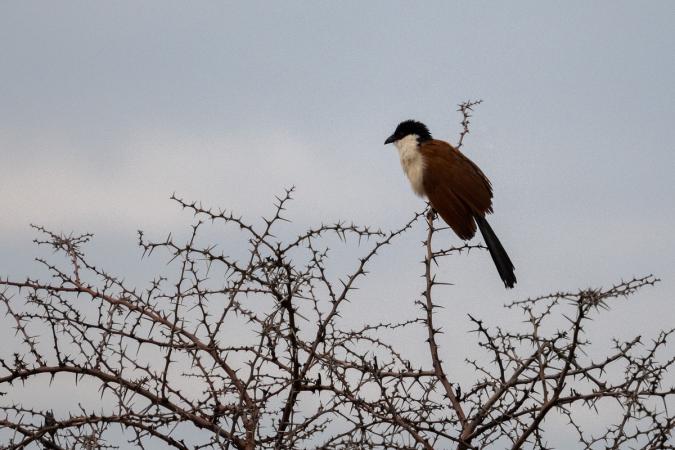
kudu are already awake.
In the golden savannah, we observe a female saddle-billed stork (she has yellow eyes, whereas the male has black/brown eyes).
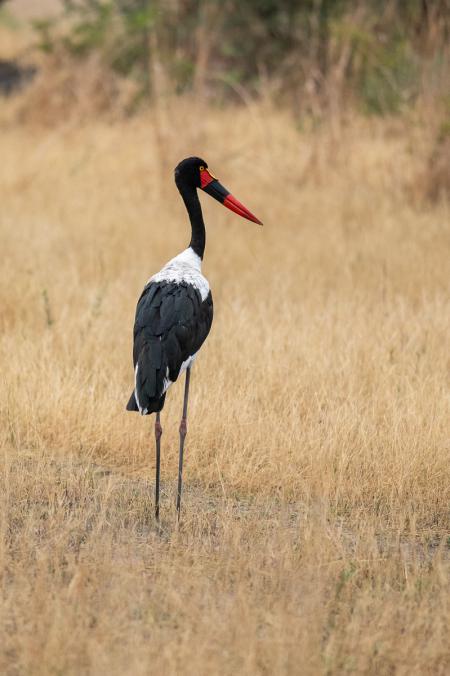
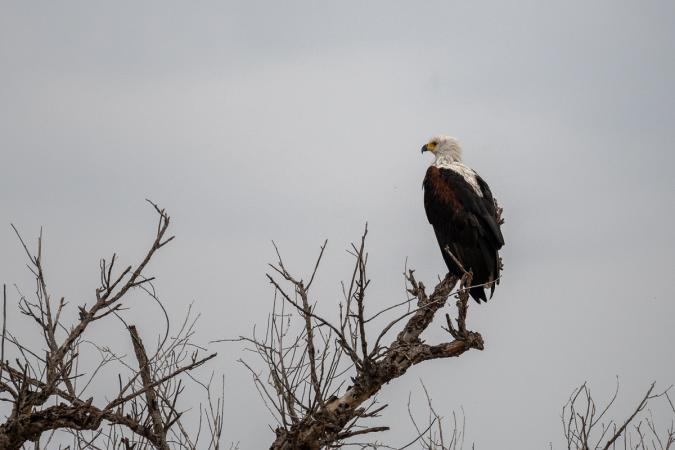
That's a nice bird too. Then there's a small group of yellow-billed storks, a perched Egyptian goose, and an african fish eagle. It's easy to recognize with its white head.
A giraffe is walking with her 8-week-old calf, according to our guide. Suddenly, we arrive at full speed on a kind of plain and the four of us in the car shout “stop, Newman.” He slams on the brakes. There are two bat-eared foxes. They are about ten meters from the car.
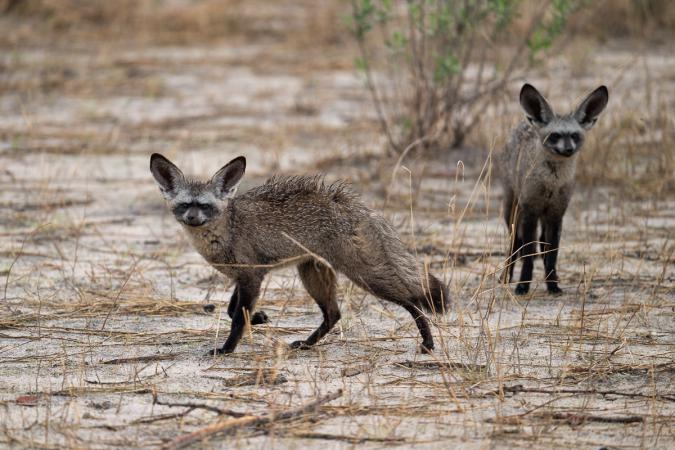
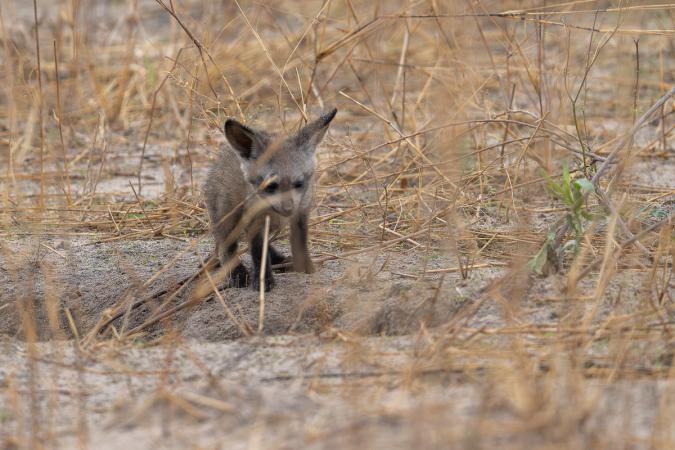
They are all small, about 40 cm high and 50 cm long, plus a bushy tail. Strangely, they don't run away, which is unusual. Newman tells us that there must be a burrow nearby with young ones. Indeed, we can see a small head close to the ground popping up from time to time. But it's not easy to take a picture of it.
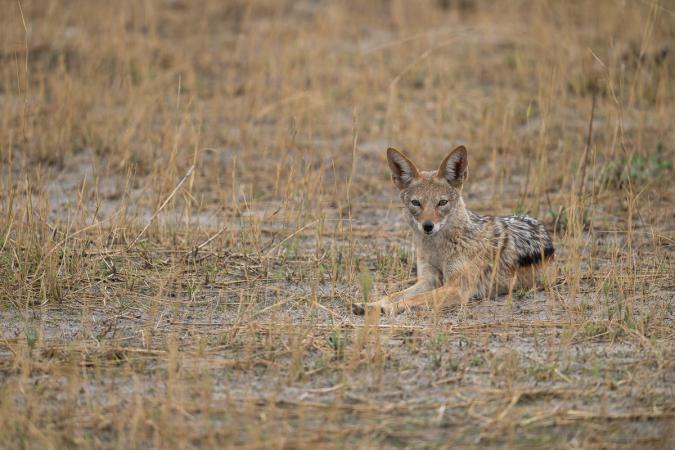
We are so happy, we didn't expect to see any. We continue on and stop to watch an african fish eagle perched on a termite mound. From time to time, Newman talks on the car radio, probably exchanging information! A hyena watches us pass by. Then we see a jackal, sitting comfortably in the tall grass.
Suddenly, our guide speeds up and races ahead. It's bumpy! In a plain with some tall grass, wild dogs are watching and resting. Oh, how wonderful! That was one of our goals: to see wild dogs!
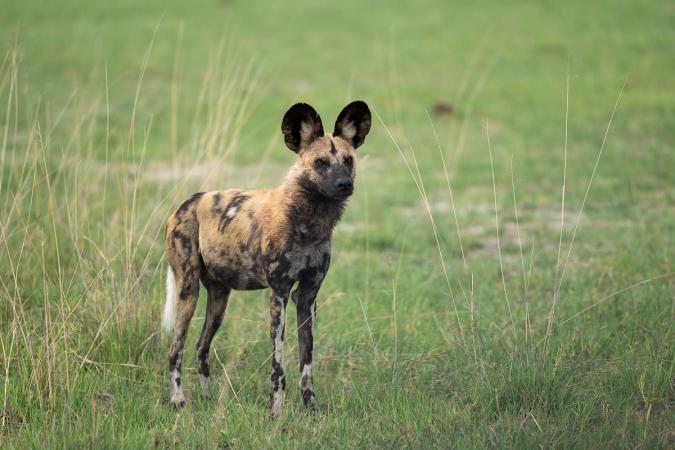
There are eight of them, one of which has a collar. Newman explains that they are being “monitored” by scientists in order to protect them.
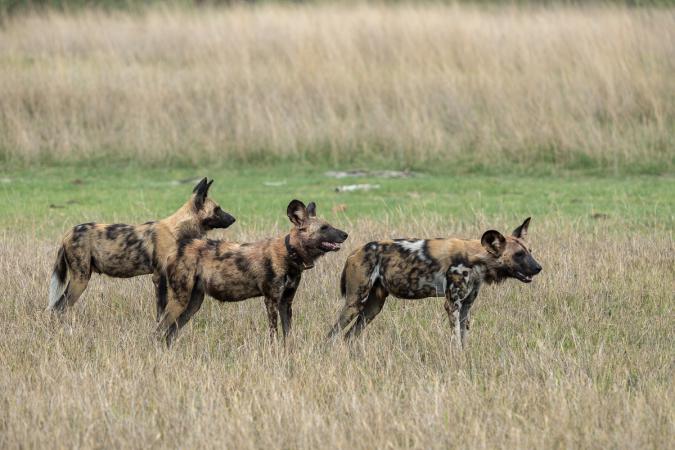
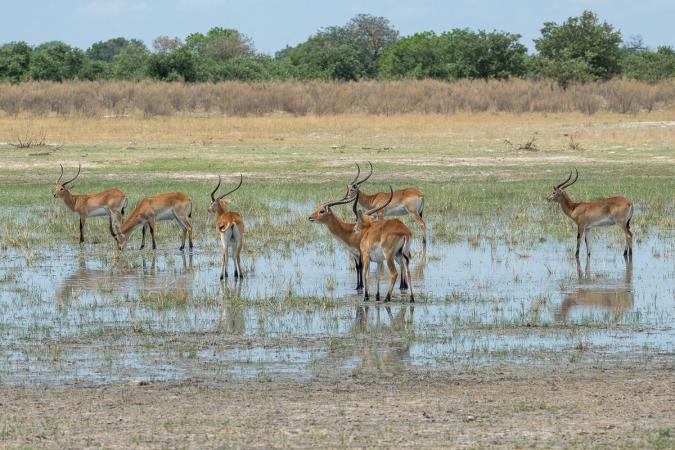
They move. They get up, play around a bit, and walk toward the river with the intention of drinking. They observe, sniff, and finally leave without drinking. There are crocodiles in the water. We follow them for a while, then go for a late breakfast around 10:00 a.m. (we spent almost an hour with the wild dogs). After eating, we set off again to look for animals. Great egrets, lechwe antelopes standing in the water. It's very pretty.
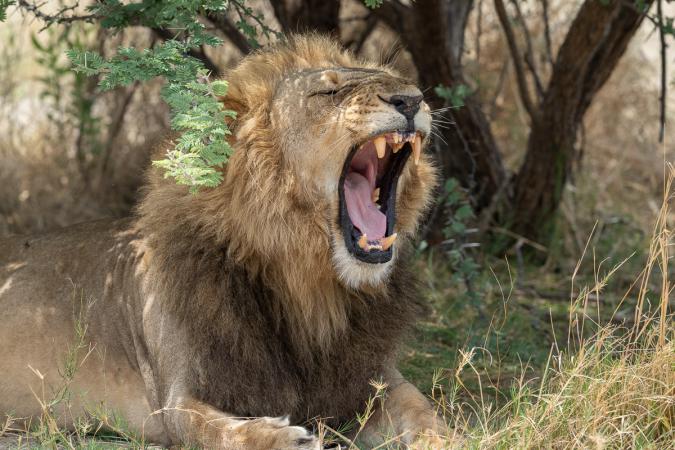
We track lions after seeing a buffalo carcass. We find them a little further on, as usual, sprawled out. It's a different pride from yesterday, the Third Bridge (if I understand correctly). There are 10 females and a 6 or 7 year-old male with a beautiful blond mane... and big teeth!
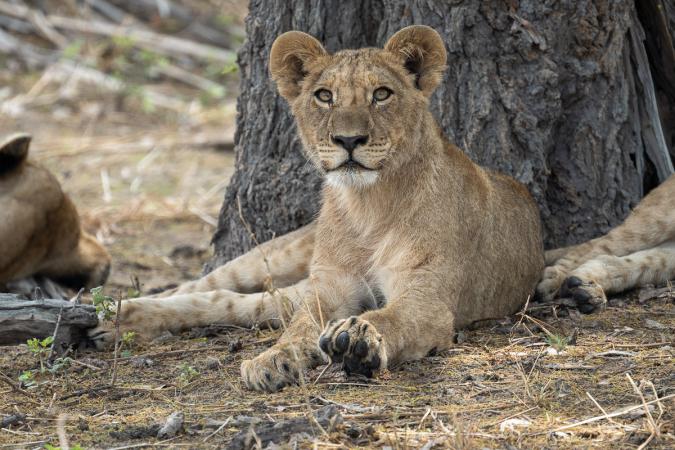
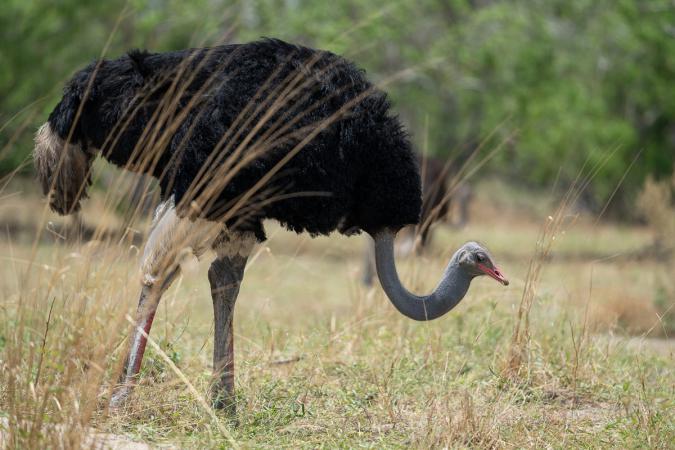
We cross paths with two ostriches.
Then we come across a fight between impalas. We hear their antlers clashing. It doesn't last long, no one gets hurt! Next, we see two cranes,
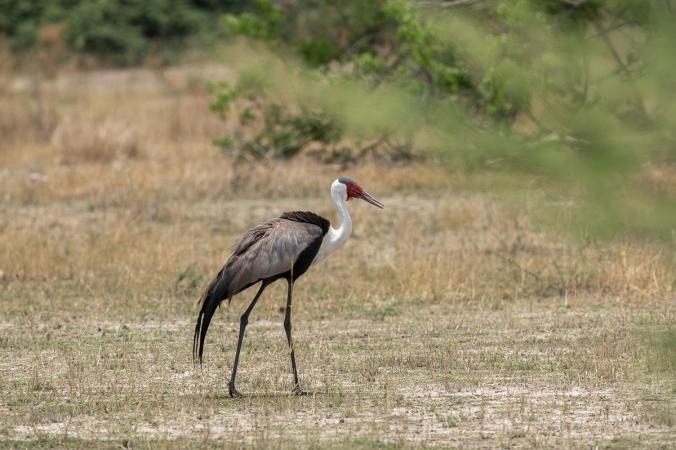
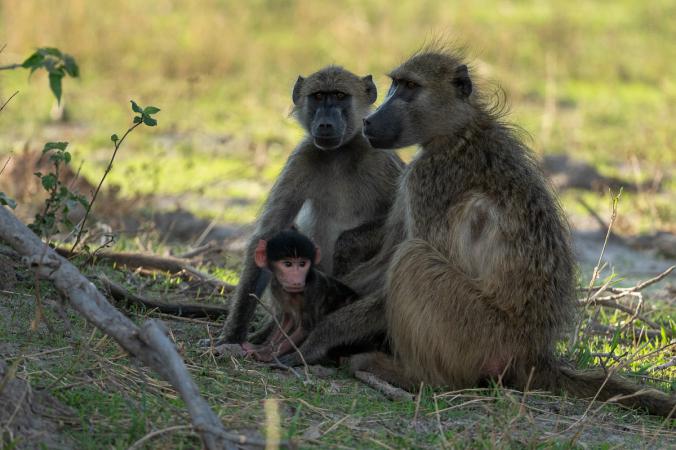
A young saddle-billed stork, a few giraffes. One of them has a deep scratch on its right buttock. We return to camp at 12:50 p.m. for lunch: egg, tomato, and chicken salad wrap. Shower. Snack at 3:50 p.m.: carrot cake. Departure at 4:10 p.m. We drive northeast. We don't see much. Around 5:15 p.m., we cross a very muddy path and get stuck! The wheels spin and we can't move forward. Newman takes off his shoes and goes to look for pieces of wood and branches to put under the wheels, his bare feet in the mud. After two attempts, we get out of the quagmire. Phew! Right next to us, we see a group of baboons. There are two babies, between four days and a week old, moving and climbing everywhere. So cute!
A little further away, in the golden grass, another little one frolics under its mother's watchful eye: topis. Then it hides behind the mound.
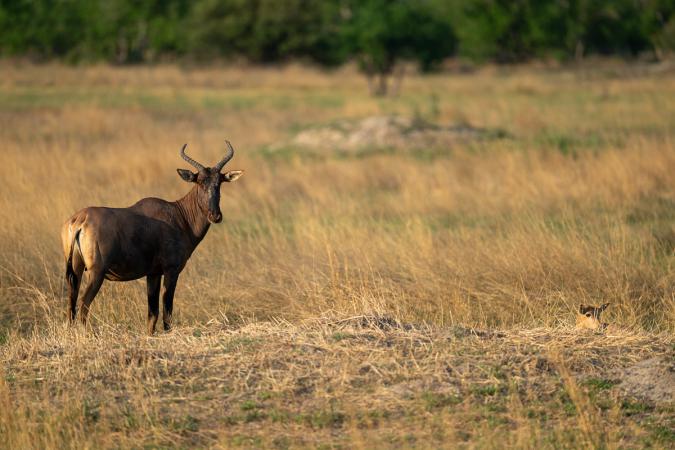
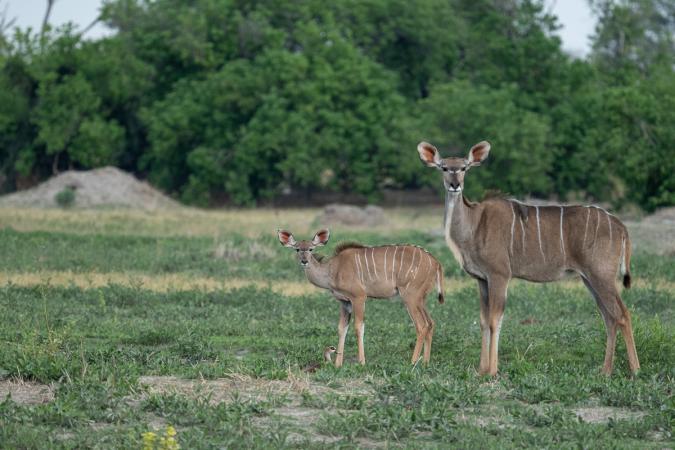
According to our guide, it is four days old. We go from the blond of the savanna to the green of the grass where kudus graze. It is also a pretty animal with its large ears and white stripes on its back.
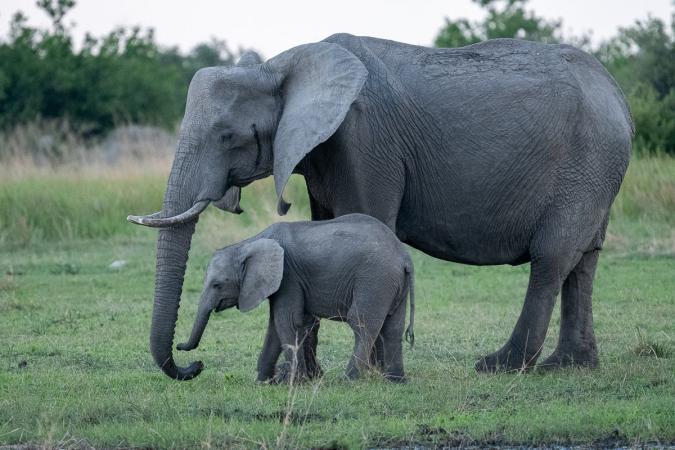
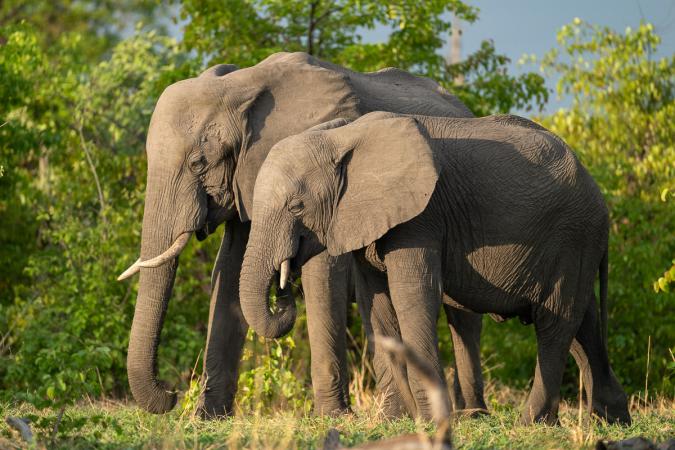
At the end of the afternoon, on the way back, we come across a herd of about fifteen elephants. Great! They are at the edge of a stream. They are drinking and eating grass. There is a tiny one that is so cute.
It's starting to get dark, which isn't ideal for taking photos. After seeing zebras and waterbucks, we are back at the camp at 7:15 p.m.
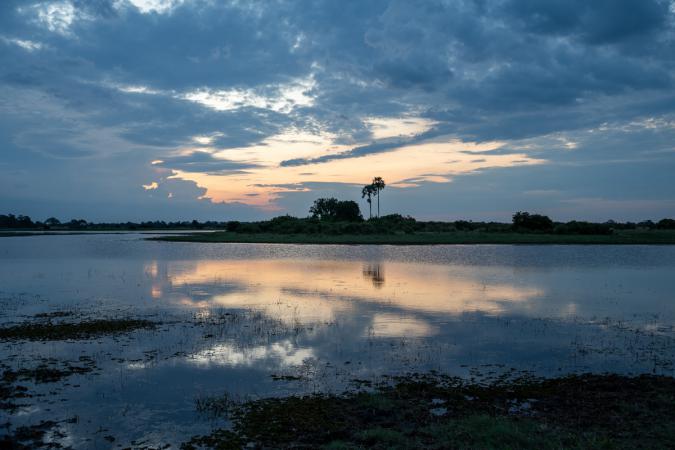
It's dark. Aperitif around the campfire. Then dinner: butternut squash soup, beef with mashed potatoes and green beans, dessert.
Friday november 7 : The night was quiet. Departure at 5:45 a.m. It's a “moving day,” which means we're changing locations and camps. For us, it's a full day of safari with a picnic lunch. Meanwhile, the camp crew dismantles the tents, heads to the next camp in Khwai, and sets up all the tents again. And we arrive just in time for drinks! So we leave Moremi via the north. We see a few animals, but it's not a crowd: fish eagles, baboons, an elephant, two vultures, one of which is on an old elephant carcass.
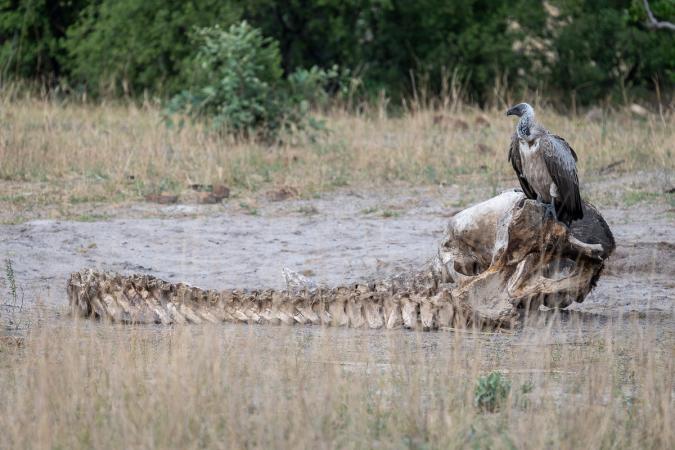
In a beautiful plain with palm trees, we photograph a giraffe. She is a babysitter looking after three young ones.
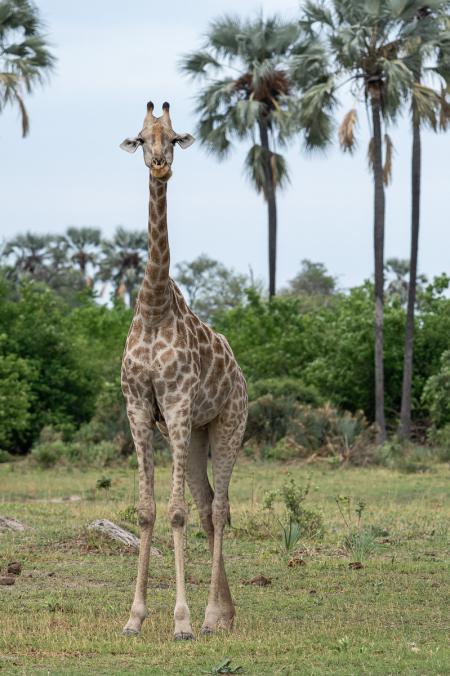
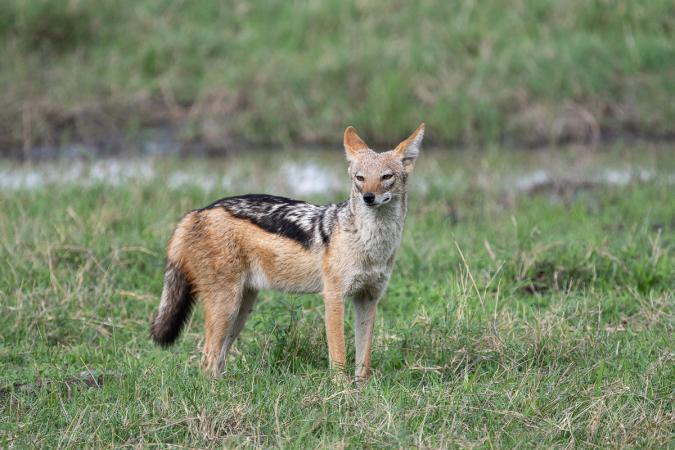
There is also a male. A little further away, in a tree, a Wahlberg's eagle watches us from above. It is black and brown. A herd of impalas graze peacefully. And there, a jackal watches for something.
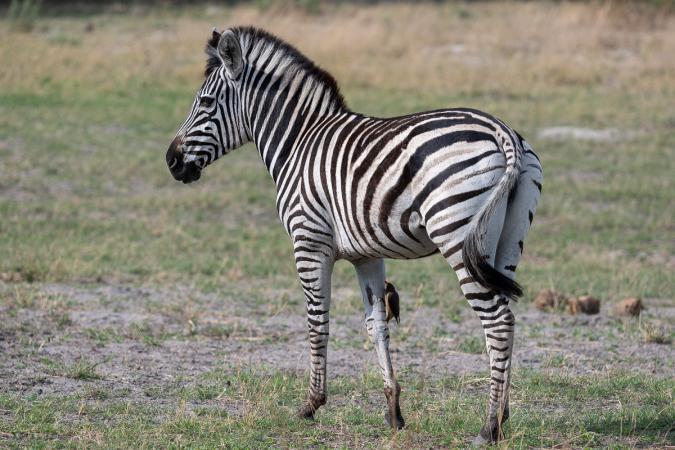
Topis, zebras
And once again, a jackal accompanies us on our journey. Newman stops to talk to two other SUVs. Ah, he's “putting his foot down”! What news has he heard? We arrive at a spot where there are already two or three cars. What's going on? We drive around a large bush and see a cheetah. How cool! It's eating a baby topi that's only a few days old.
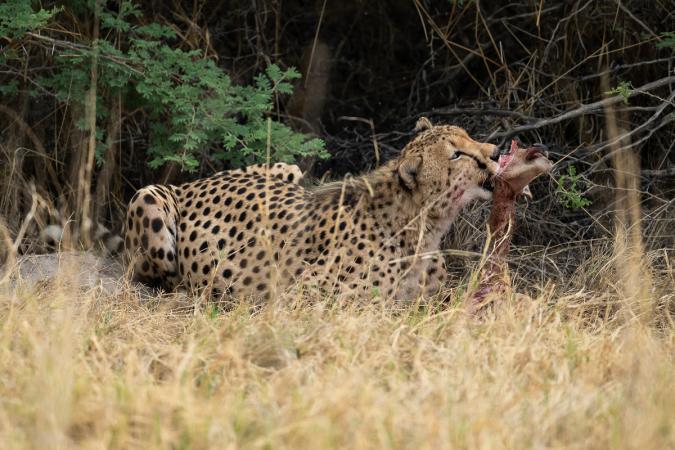
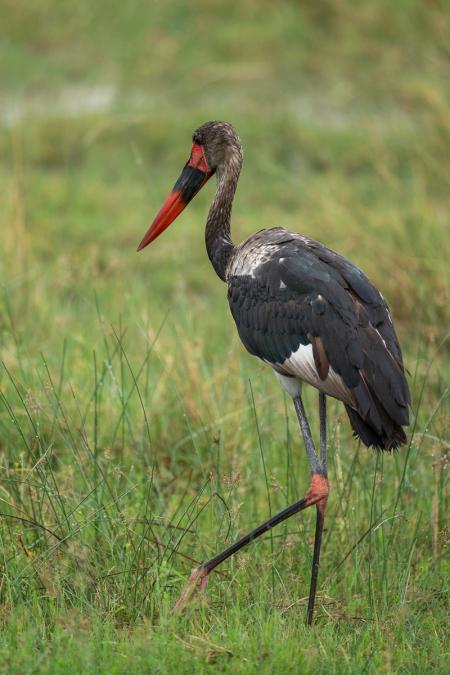
At around 9:15 a.m., after taking a few photos, we let him finish his meal and we go to have breakfast under a tree. A few drops of rain fall. We continue on our way and come across a male saddle-billed stork (black eye),
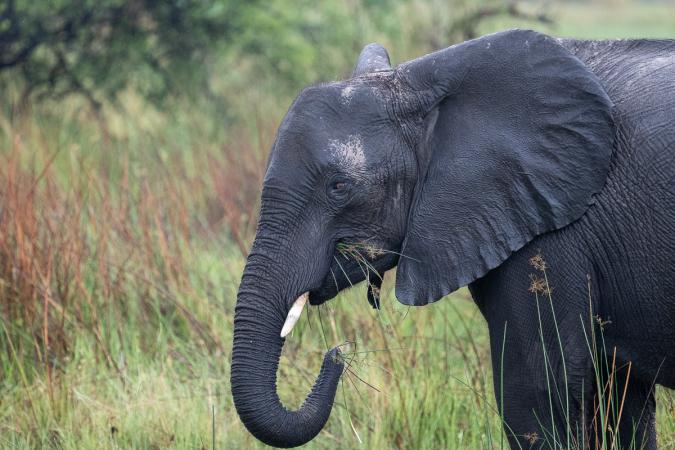
elephants,
Lechwe antelopes. We leave Moremi Park via the North Gate at 10:30 a.m. A hippopotamus and a waterbuck are wandering through the bush, or rather the marsh, as there is water there. We spot a leopard in a tree.
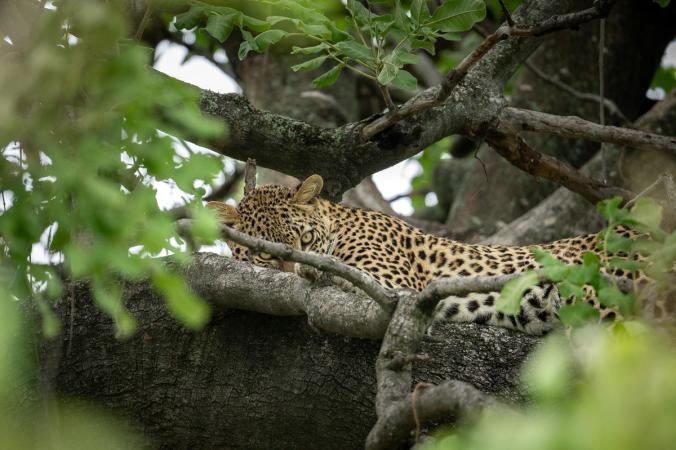
We don't know how the guide spotted it because it was well hidden. Perhaps he got the tip from someone else. We circle the tree to try to find a better angle, but there are too many branches. So we leave this beautiful leopard to sleep. Around noon, we pass through Xakanaka Gate. A little further on, we come across a large water lizard. We keep driving, and it's taking a long time! Finally, at 1:20 p.m., we stop at a place called Hippo Pool for lunch. We spot a few hippos in the pond and an african jacana.
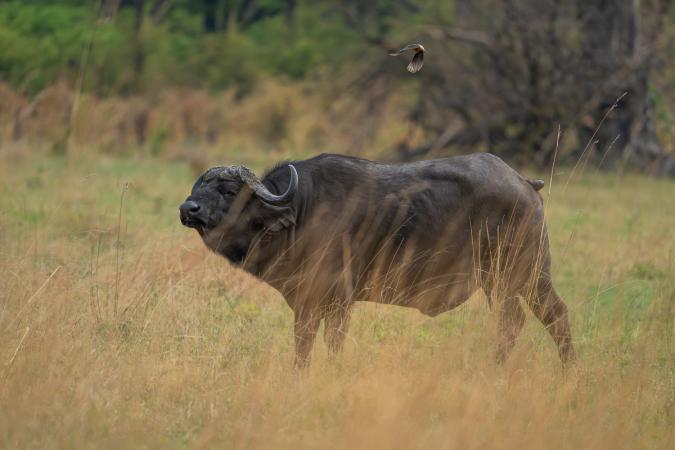
There is a wooden observatory. We climb up there after lunch, but there isn't much to see. We leave at 2:10 p.m. There are lots of carmine bee-eaters in a tree. These are the first ones we've seen. They are red/pink with blue on the top of their heads and rumps. They are beautiful. Further away, a buffalo is trying to play hide-and-seek in the tall grass, but we can still see it!
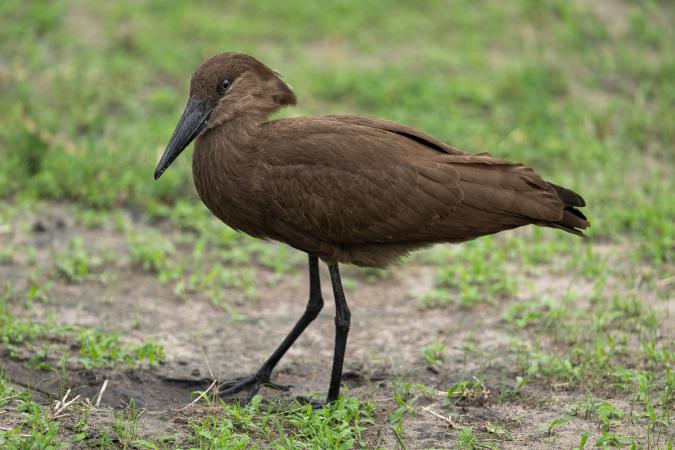
An african grey hornbill, a hamerkop,
A banded mongoose graces our journey. A Wahlberg's eagle perches in a tree. Then, impalas and waterbucks appear before we arrive at the North Gate of Khwai at 3:50 p.m.
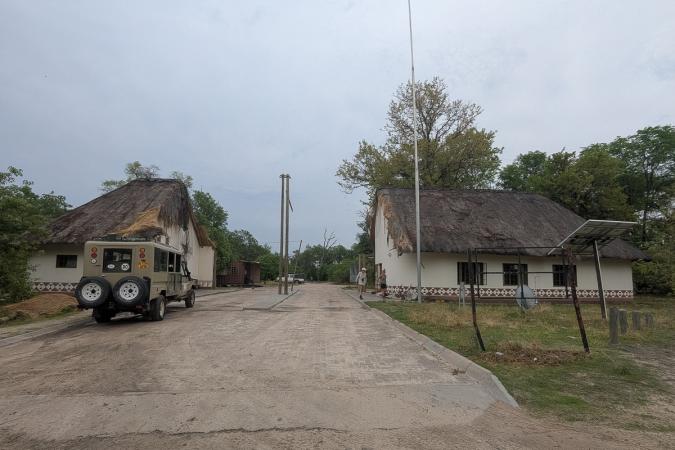
A quick bathroom break while Newman goes inside to fill out the paperwork. Animal skulls “decorate” the bottom of the building. We cross a wooden bridge and pass through the village of Khwai. We head northwest. A roller sits quietly on a dead tree trunk.
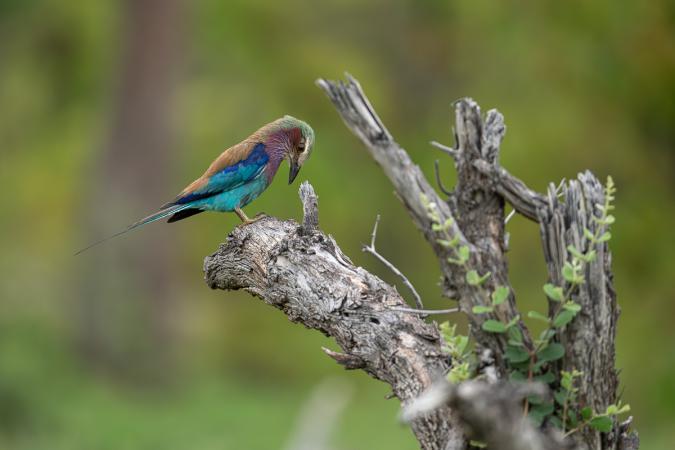
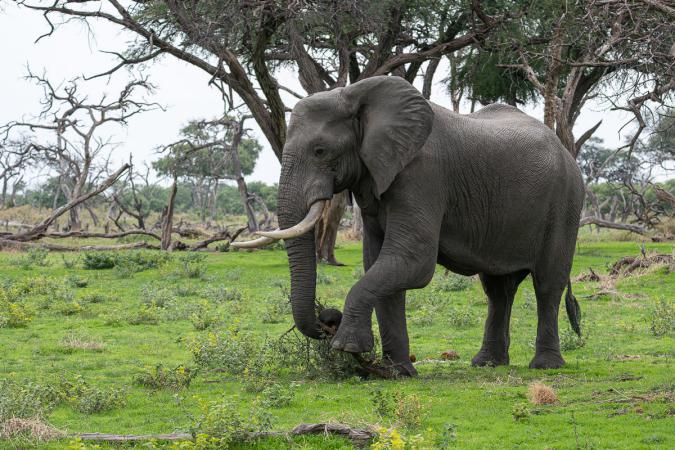
It flies away when we stop. This road is so long. And we can't see much anyway. Near the main road (well, track), lions have killed a buffalo, but they are well hidden in the bush with cars everywhere. No way to get close. We position ourselves a few meters away from a watering hole, hoping that the lions will come to drink. We wait and wait... but no one comes. We continue on our way to camp. We come across an elephant eating an acacia branch.
then two Bennett's pic on a dead tree trunk.
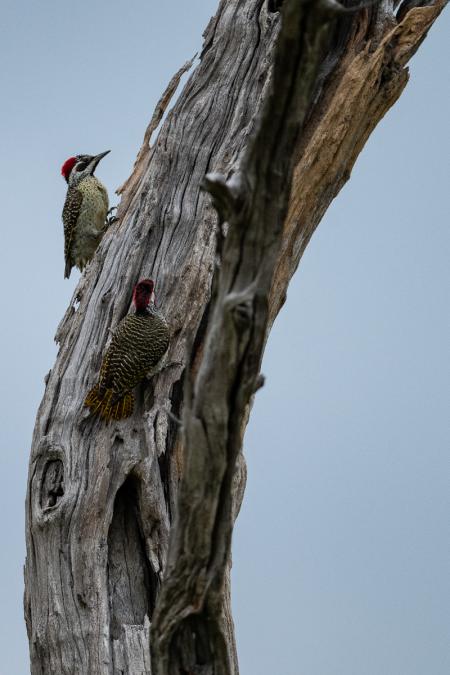
We arrive in a devastated area: nothing remains but dead tree trunks. We ask our guide if there has been a fire. But no, it was the elephants that ate all the acacia trees in this area, right down to the branches, which ended up killing the trees. Finally, at 6:00 p.m., we arrive at Khwai Camp. Dicks welcomes us with refreshing wipes. It feels good. The camp is great, more open in a small meadow with green grass and a few trees.
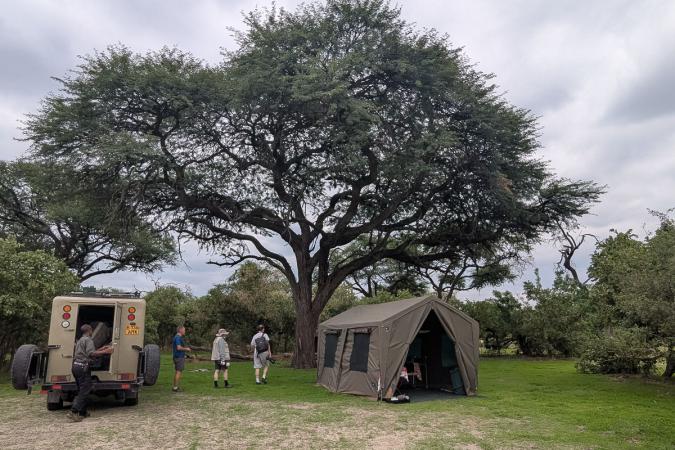
Campfire aperitif. Dinner: melted Camembert with tomatoes, couscous, caramel pudding. Very good. Bedtime at 8:45 p.m.
* * *
Moremi Game Reserve review :
* * *
Saturday november 8 : departure at 5:30 a.m. We'll see if yesterday's lions are still there and easier to approach. Yes, they are there and quite numerous, but surrounded by vegetation. There are only two cars at the moment, so we can get a little closer. The male is eating the buffalo with the lionesses.
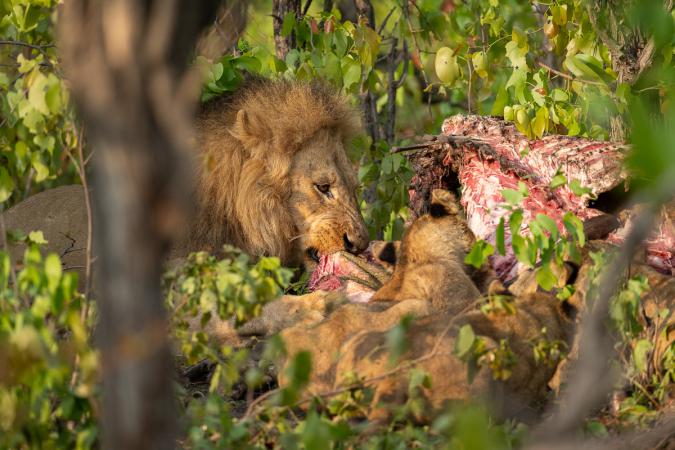
Cubs roam around. We hear grunting noises from time to time. We spend at least an hour watching them. Further away, giraffes are also eating tree leaves. They are well lit by the sun.
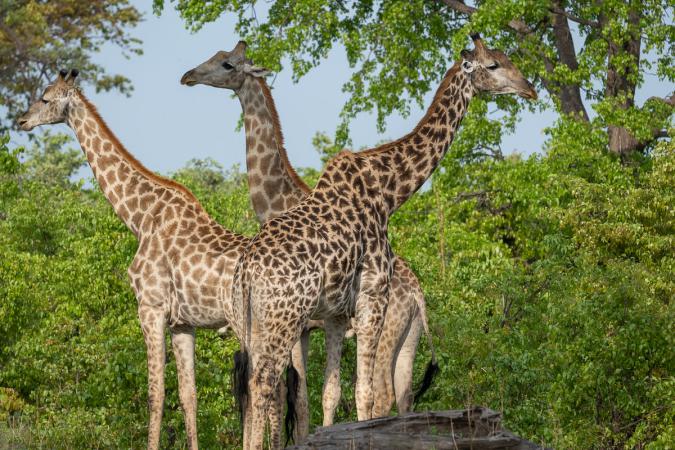
We drive along a river where we spot a crocodile in the distance. Then I ask the driver to stop the car because I've seen some baby african jacanas with their father. I don't know how I managed to see them because they're somewhat hidden by the grass.
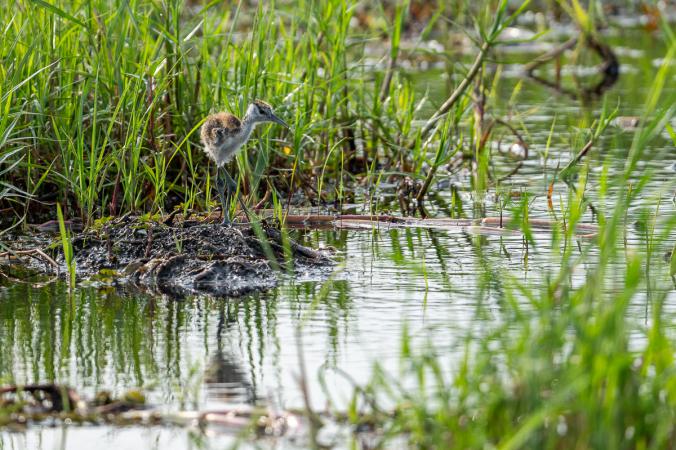
After seeing an unidentified bird of prey, we stop for breakfast around 8:00 a.m. We continue our tour: warthog,
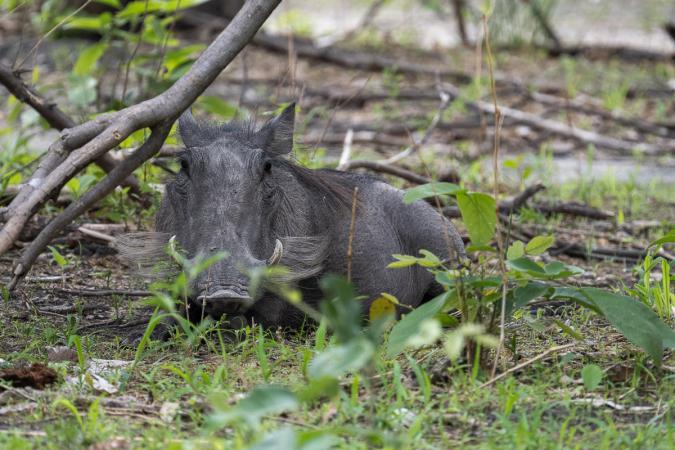
yellow mongoose, roller, Burchell's starling. Next, we encounter Burchell's zebras. This is the only species of zebra in Khwai.
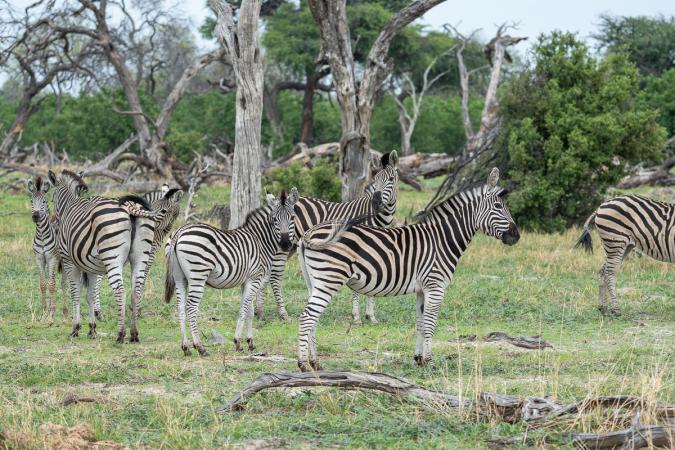
They are distinguished by brown stripes between the black and white stripes. Red-billed hornbill,
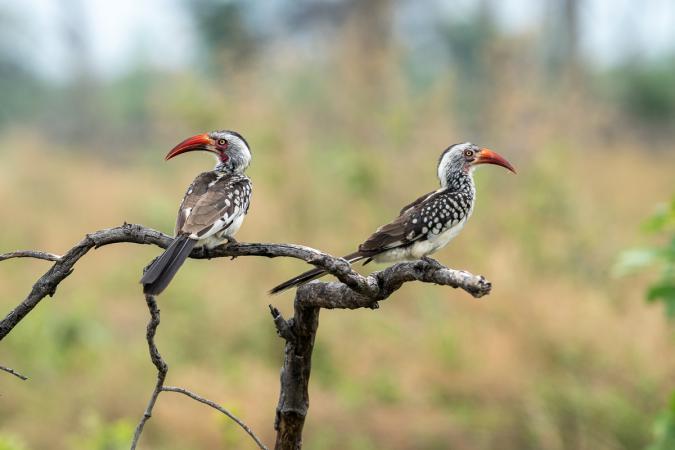
cuckoo and roller pose for photos. We drive on and on. We see yesterday's elephant again, apparently, then a lone wildebeest. Heading a little further south/east, we pass by the Khwai River. On the other side of the bank is Moremi, where there is a large herd of buffalo.
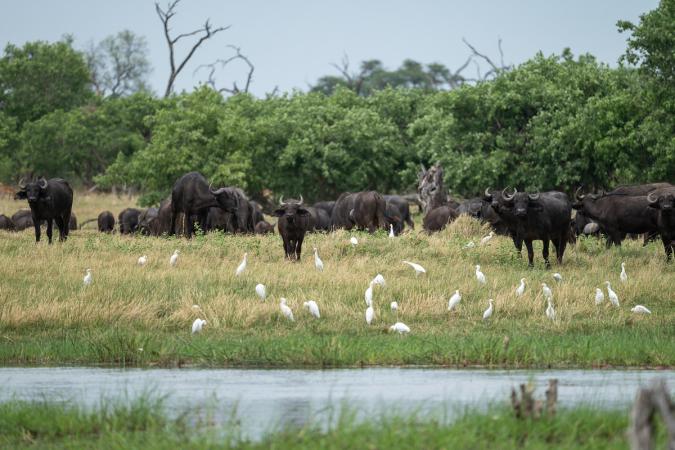
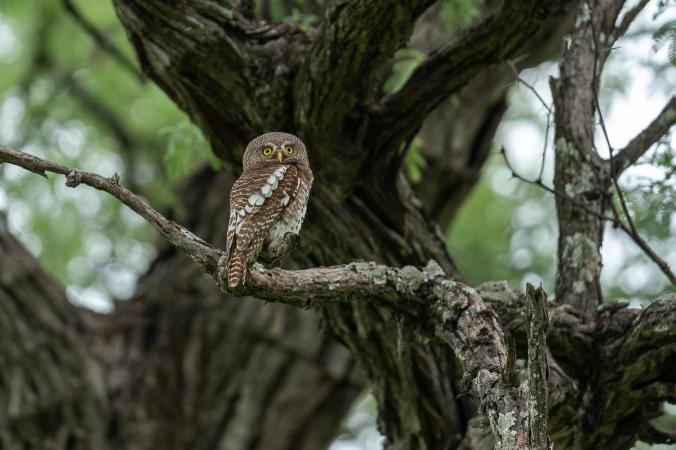
Newman lets us get out of the car to take photos. As we continue, we see hippos in the river. We spot another red-billed hornbill and a Burchell's starling. We return to camp early at 11:15 a.m., a sign that there isn't much to see! We have lunch at noon: omelet, zucchini, salad, and tomatoes. In the early afternoon, an elephant passes near our camp. We take pictures without getting too close. In a tree near the tents, we see an african barred owlet, a small owl with yellow eyes.
Then Newman takes out his maps of Botswana and explains lots of things to us. I don't understand everything (I'm not very good at English). The water that feeds Botswana's rivers comes from rainfall in Angola. It takes six months to reach the Okavango Delta before flowing east and south along the rivers. After tea time at 4:15 p.m., we set off again. After half an hour, we turn back. Étienne isn't feeling well. We go to the campsite reception (a few cabins) to get cell service so we can call his insurance company to arrange for repatriation. He has to explain at length what's wrong and tell them that we're in the middle of nowhere, a three-hour drive from the nearest town, before they agree to repatriate him. Tomorrow, a guy from the camp will take him back to Maun to the hotel where we were when we arrived. We return to the camp at 6:30 p.m. We have a drink by the fire, but the mood is gone. Dinner is vegetable soup, beef and noodles, with peach dessert.
Saturday november 9 : we leave at 6:00 a.m. after Étienne leaves with Dicks. It's not exactly joyful. We head west. The day begins with hippopotamus ears sticking out of the water before diving back in. A waterbuck with beautiful horns grazes without paying any attention to us. However, an impala and her baby flee as we approach. We then turn our attention to a red-billed hornbill. A herd of buffalo crosses our path, or perhaps it's the other way around! And a waterbuck without horns!
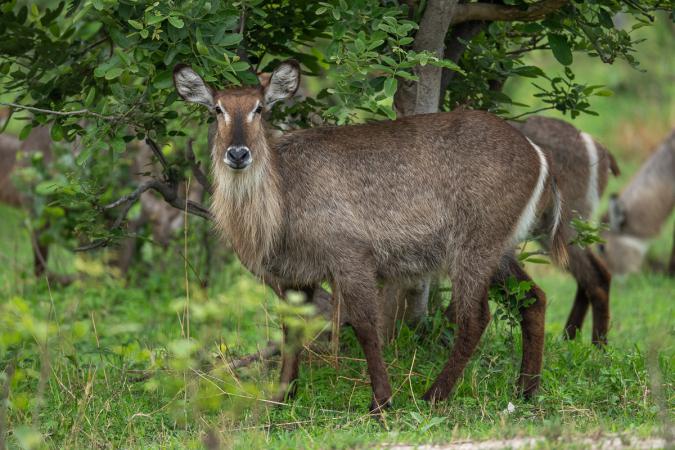
Further on, we see some baby francolins. They're funny! A giraffe and its cleaner bird watch us from above, or perhaps it's the other way around, but from below!
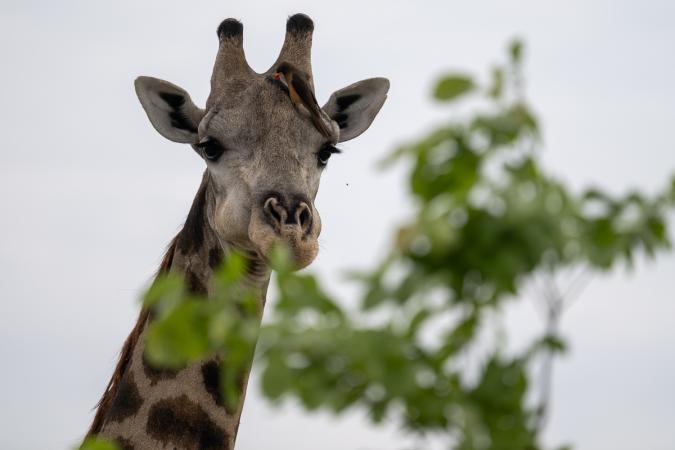
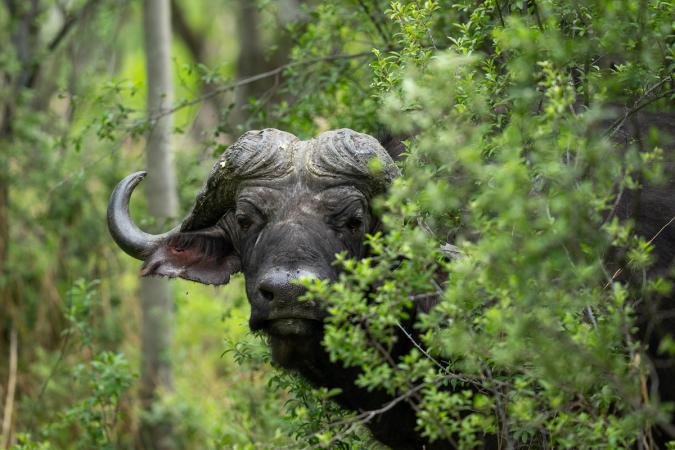
It's an old male who is injured on his upper thigh after a fight with another giraffe. Then a buffalo wants to play hide and seek, but we're not too keen!
As we approach a watering hole, we spot birds: great egrets, fish eagle, white-headed ducks, rollers. Following a tip-off, we set off in search of a leopard and her two-month-old cub. We stop for breakfast at 8:45 a.m. Later, on the road, Newman stops and gets out of the car. He returns with a turtle in his hands. It is a leopard tortoise, which he estimates to be six months old.
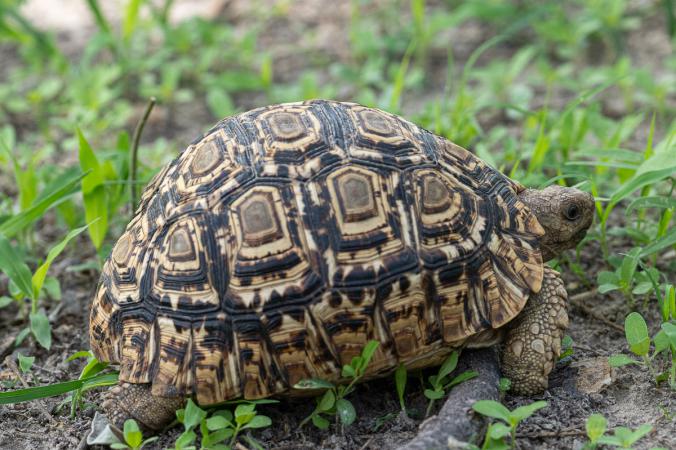
He shows us how to tell a male from a female before putting it back where he found it. A grey-billed hornbill waves at us from the top of a branch. We come across some waterbucks sheltering in the shade. But we still haven't found the leopards. Passing by the river, we notice some fishermen in a boat. As we approach the camp, baboons are drinking from a pool of water.
 There are still some very young ones. We return to camp at 12:00 p.m. Today's menu features roast meat, potatoes, beets, and carrots with vinaigrette. I attempt to take a short nap after showering. Meanwhile, an elephant passes through the woods behind the tents, relieves itself near the campfire, and crosses the camp in front of the dining tent. I missed it, damn it. David came to call me, but I didn't hear him. We have a snack and leave again at 3:20 p.m. It starts with birds: red-billed hornbills, Burchell's starling,
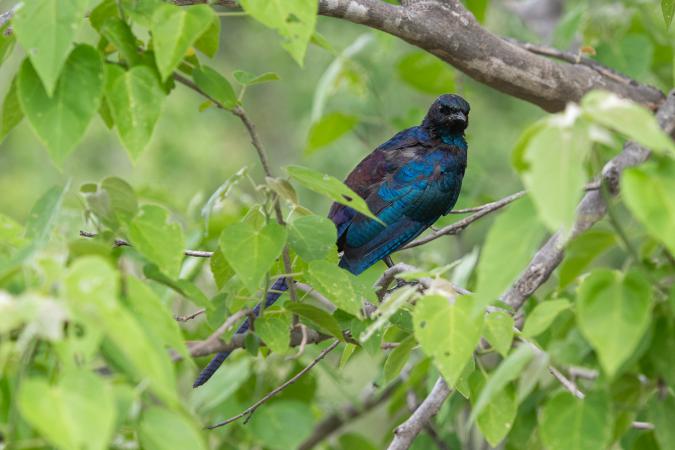
african jacana. A few minutes later, a hippopotamus emerges completely out of the water. Francolin perched on a branch, juvenile bateleur,
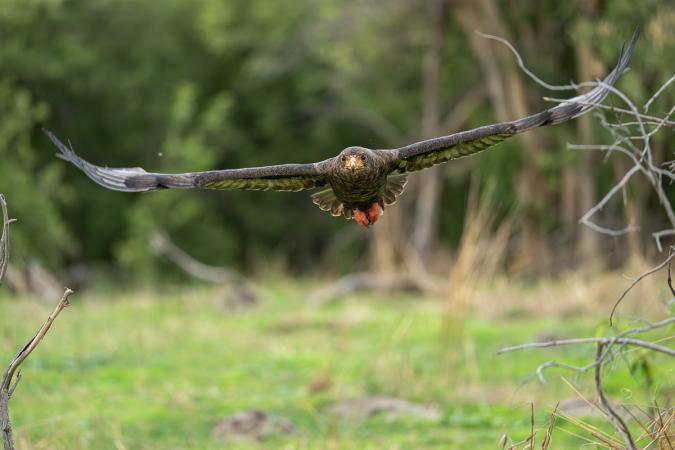
tawny eagle eating something shows itself to us. A giraffe tries to hide behind a tree trunk but fails.
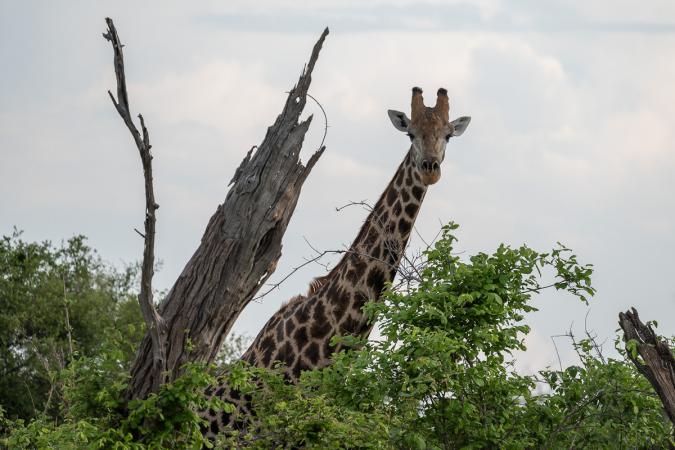
Impalas and magpie shrike are there too. We stop in front of a yellow mongoose. It doesn't look very friendly.
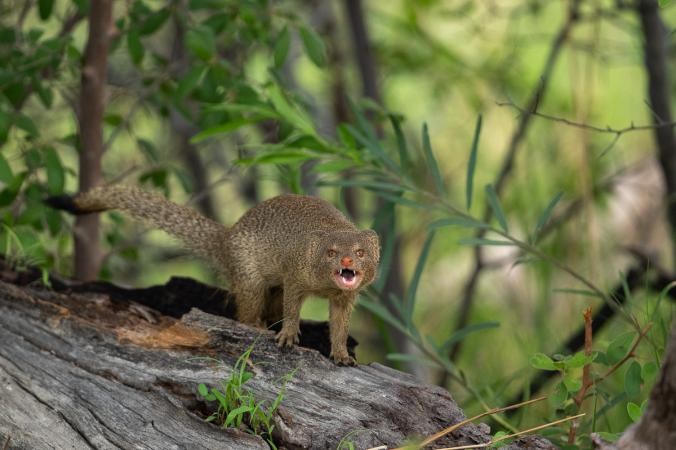
Up there, on the dead tree, there is a Wahlberg's eagle. While walking along the trails, we come face to face with three elephants.
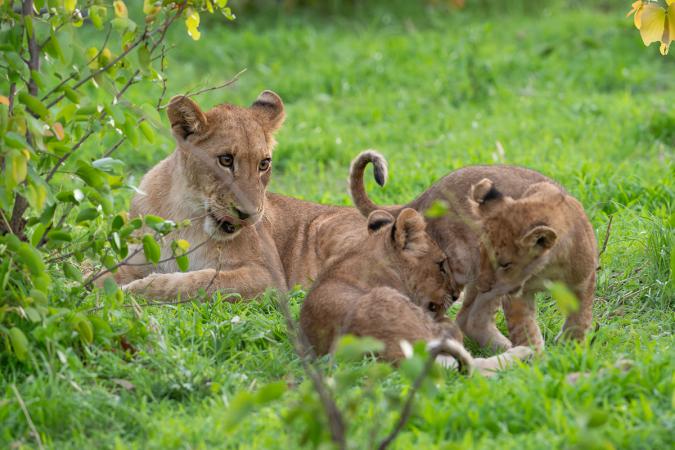
As we approach the camp, we encounter yesterday's pride of lions. The adults are lounging around as usual, but the cubs are playing with a “middle” lion who seems to be watching over them. It looks like he's their nanny!
The light at the end of the day is beautiful. We end with a beautiful sunset over a beautiful tree.
.jpg?v=1kouepd)
Return to camp at 7:15 p.m. Dinner at 7:30 p.m.: tuna, tomato, and peach salad, lamb and rice, chocolate dessert with whipped cream.
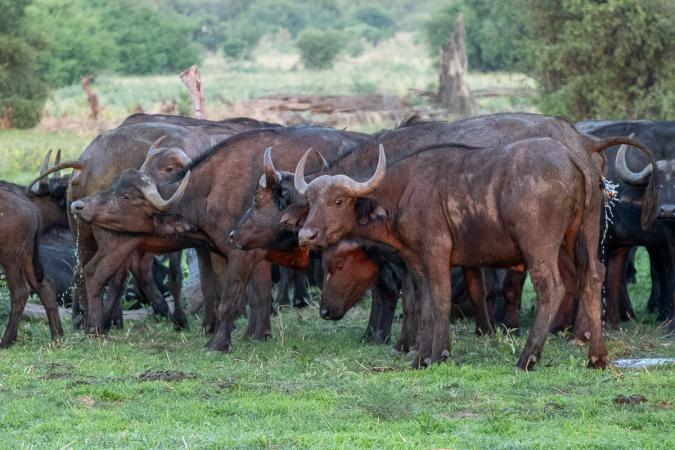
Monday november 10 : departure at 5:40 a.m. Big blue sky this morning. Sunrise over a herd of buffalo. There are many of them.
We head north. The impalas, Burchell's zebras, helmeted guinea fowl, Meves's starling, vultures, and hoopoes are also awake. At the edge of a pond, a striated heron is poised to fish, but finally flies away.
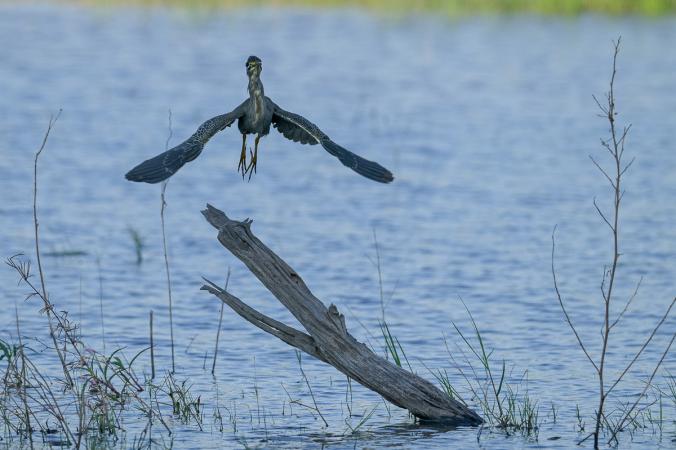
Next, we see a slaty egret. It is gray with yellow legs and eyes. A hamerkop, a great egret, a spoonbill, a sacred ibis
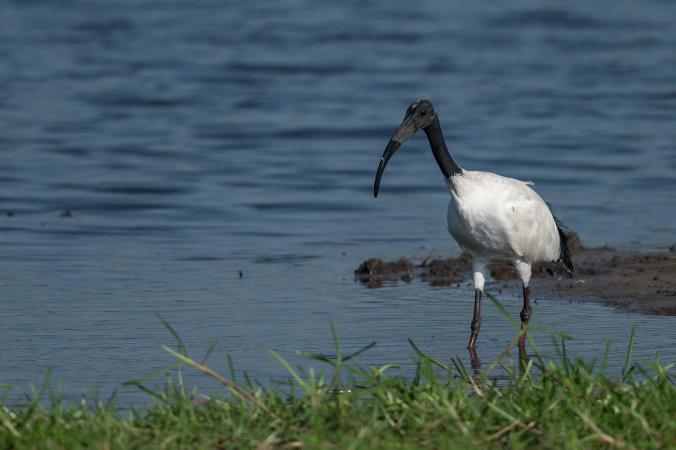
are also looking for something to eat while a stork flies overhead. We, too, settle down around 8:00 a.m. at the edge of the pond for breakfast. We stay for a while, trying to follow a pied kingfisher as it fishes. It caught a little frog. Oh no, it dropped it.
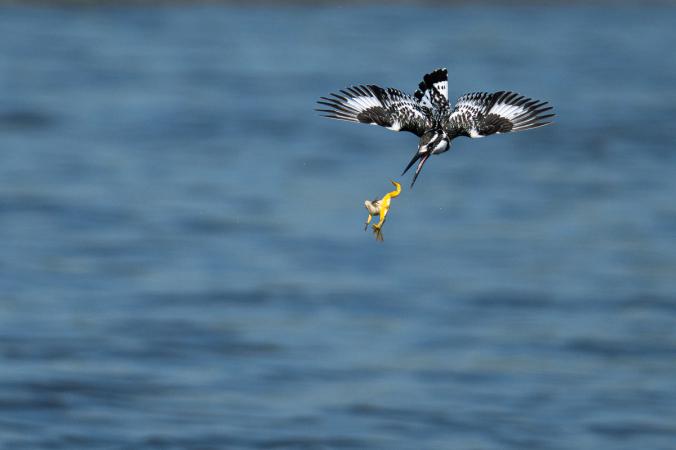
He dives into the air to catch it, but I think the frog gets away and falls back into the water. Meanwhile, the hippos are dozing peacefully in the water. We continue driving and a little further on, we see a hornbill building its nest on a tree trunk. It brings mud and tries to stick it on. Another one is busy preparing a meal.
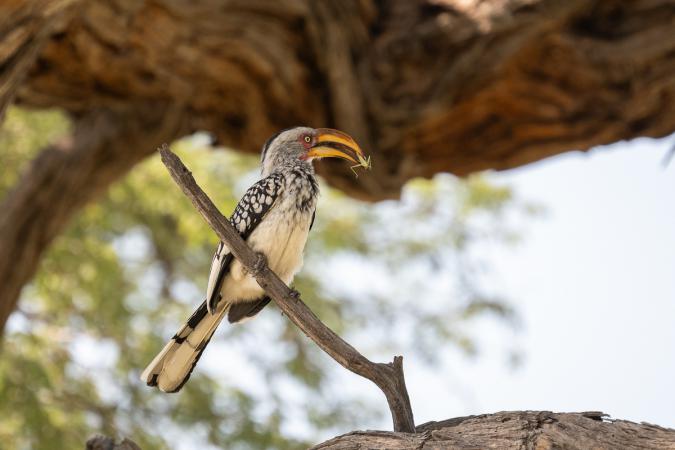
We spot a leopard tortoise in the grass. Then an elephant, kudus grazing peacefully. A few kilometers further on, two impalas are fighting, but it doesn't last long. It's very hot, and it's only 10:40 a.m. We stop in front of some dwarf bee-eaters perched on branches.
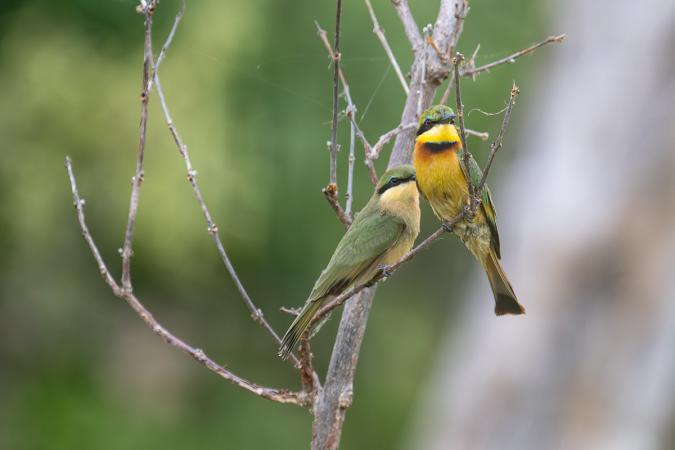
Well, there aren't many animals this morning! So the driver returns to camp at 11:00 a.m. We have chicken salad for lunch at noon. As usual, our friend the elephant passes by our camp. There is also a red-billed hornbill. We set off on safari again at 3:45 p.m. after a snack. We come across some wildebeests.
 We pass impalas and a leopard tortoise. Yesterday, wild dogs were spotted in the area, so we try to look for them. We stand where they were and Newman imitates their barking with a call. But it doesn't work, they don't come. So we settle for a roller,
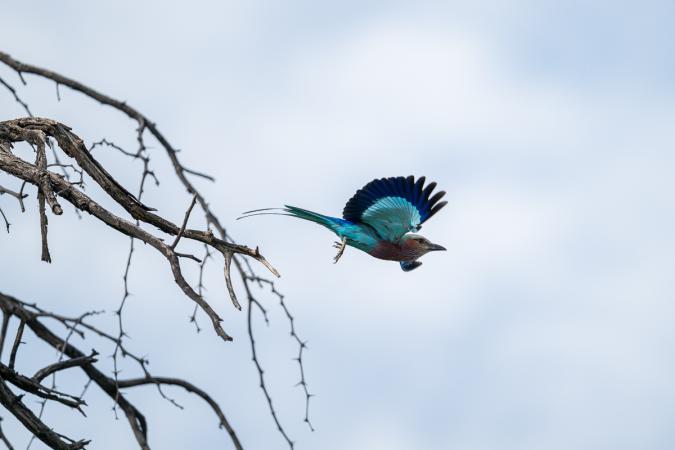
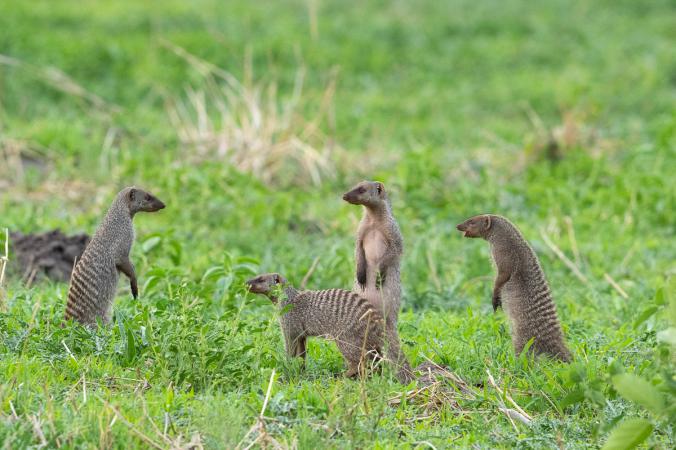
elephants, mangooses.
There is not much to see! We're watching a beautiful sunset
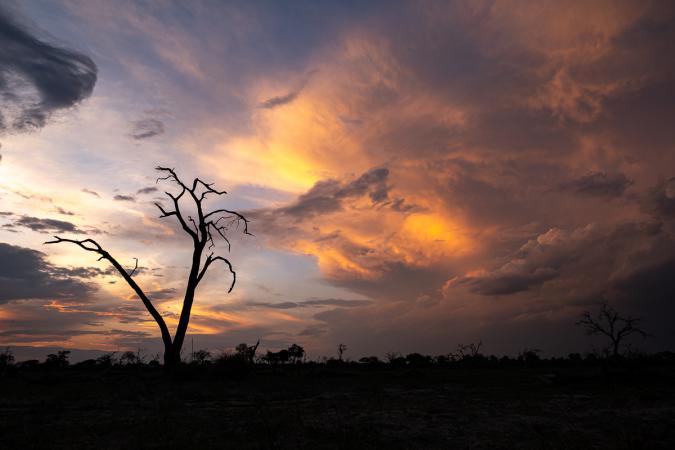
and we return to camp around 6:45 p.m. As usual, we enjoy drinks by the fire while Dicks announces the menu: sweet potato soup, pork and potato gratin with cauliflower, carrots, and mushroom sauce.
Tuesday november 11 : departure at 5:35 a.m. We watch a beautiful sunrise over a dead tree.
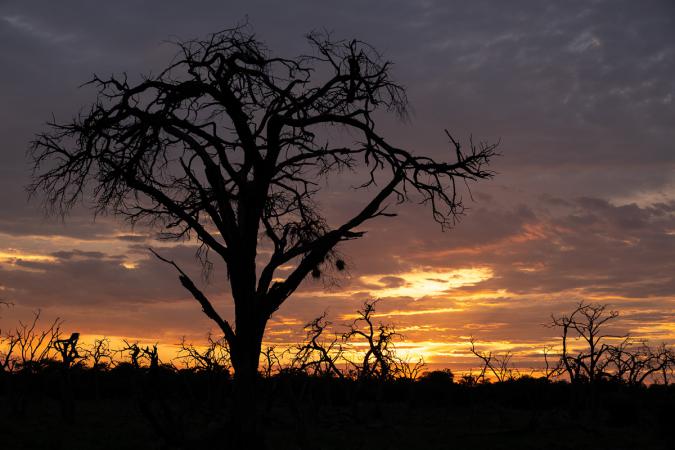
Although it is not permitted, we are going to make a foray into Chobe National Park in the east. Two african hawk eagles are perched on a dead tree.
 Zebras, kudus, tawny eagles, mongooses, rollers, sacred ibises, and impalas grace us with their presence. We drive along the Khwai River. At the water's edge, we manage to photograph an african jacana.
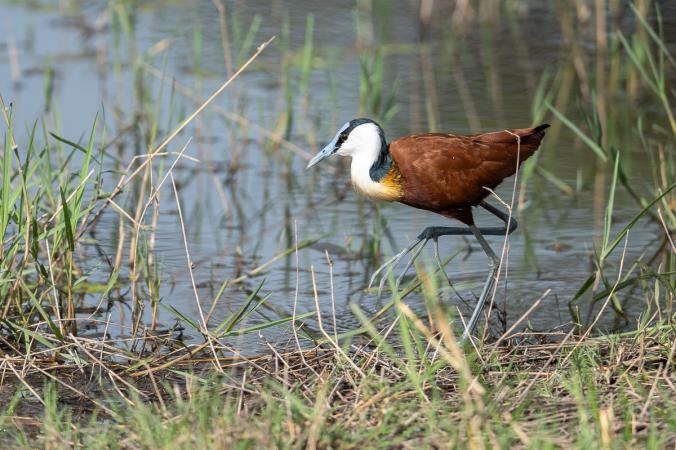
It moves quickly with its long legs. There is also a Hadada ibis, which is brown and gray.
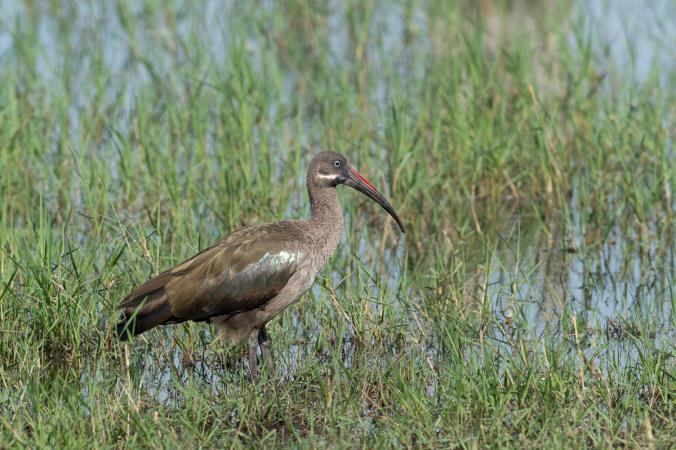
as well as a young bateleur eagle. The landscape is a little more beautiful with the river and marshes, a few trees.
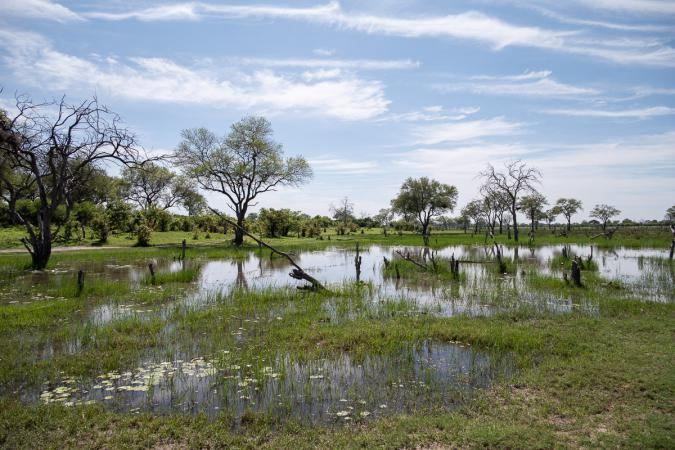
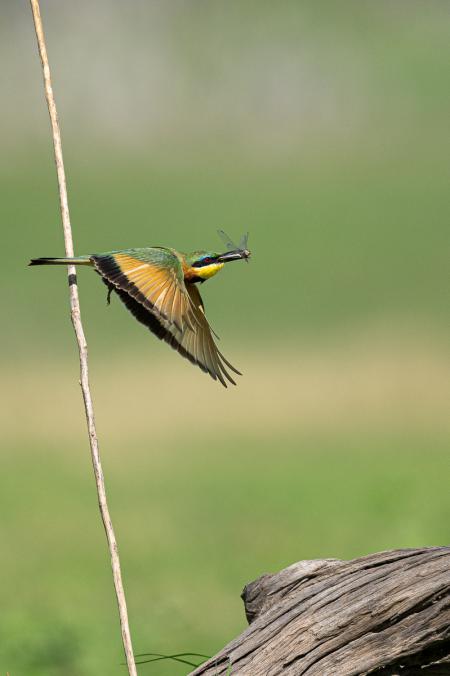
It's nicer than the bush! Around 8:30 a.m., we stop for breakfast. Right in front of us, there is a dead tree trunk lying on the ground, and bee-eaters take turns landing on it.
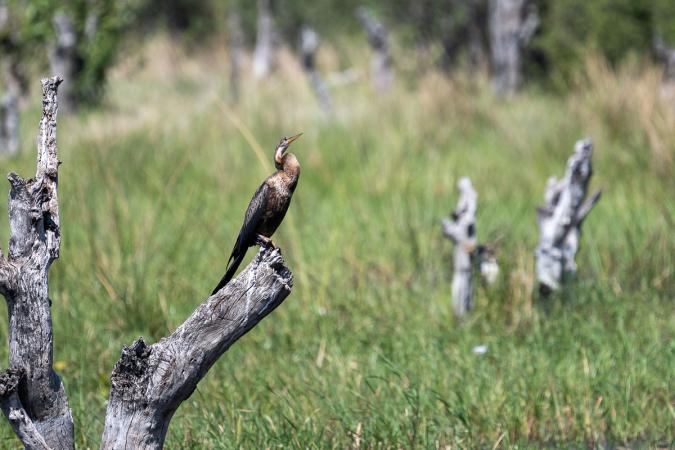
We continue along the river trail. We see long-toed lapwings, another african jacana, and a spur-winged goose (black with a white head and red beak). Over there, on the opposite bank, perched on a tree trunk, is an African darter. It looks like a cormorant.
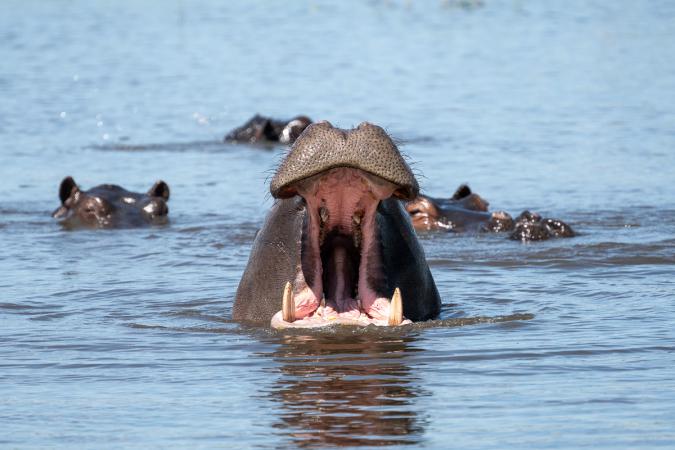
Hippos appear in the middle of the water, diving and yawning.
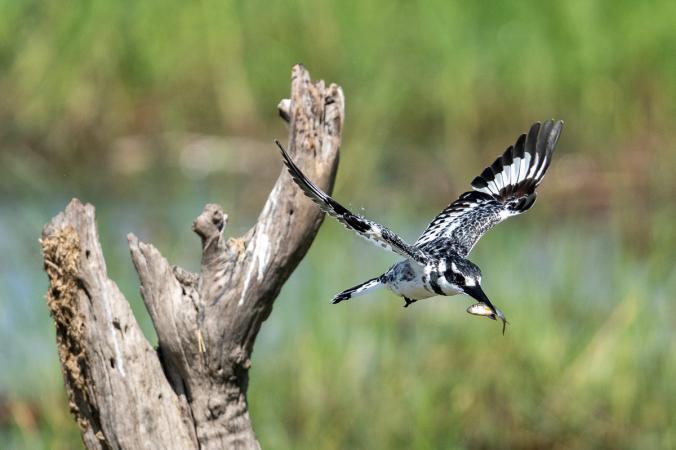
All the water birds are here: pied kingfisher,
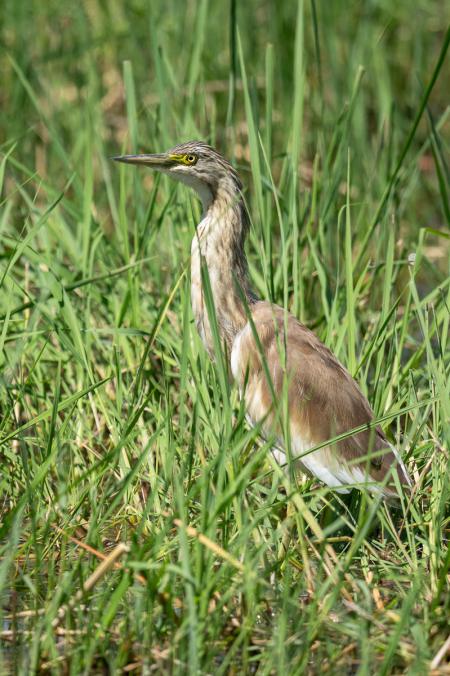
pond heron,
and more jacanas. It's so great here! We continue on our way and come across two elephants wading in a few inches of water.

They graze, drink, and throw mud on each other's backs. Superb. A tawny eagle flies from tree to tree. A waterbuck rests in the shade.
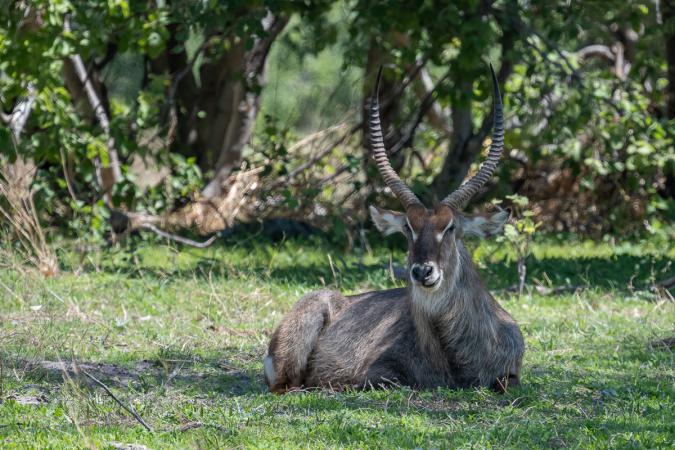
At around 10:40 a.m., we take a road that forms the border between Khwai and Chobe. We encounter a fish eagle and baboons.
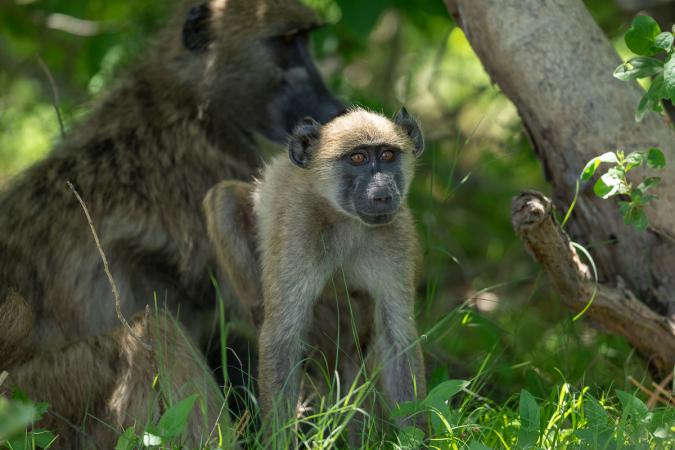
We return to camp at 11:20 a.m. On the menu for lunch today is pizza and vegetarian quiche, with a green salad and tomatoes. Our elephant friend comes back to say hello again around 3:00 p.m.
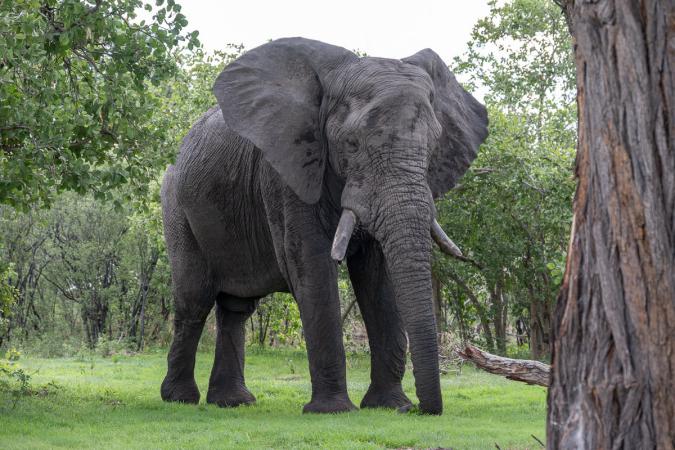
The grass must be better on our campsite. It crosses between our dining tent and our sleeping tents. It passes 5 meters away from me, it is super impressive and doesn't smell very good! Magical! Tea time cake and we get back in the car at 4:00 p.m. After a few kilometers, a wild dog is lying on our track.
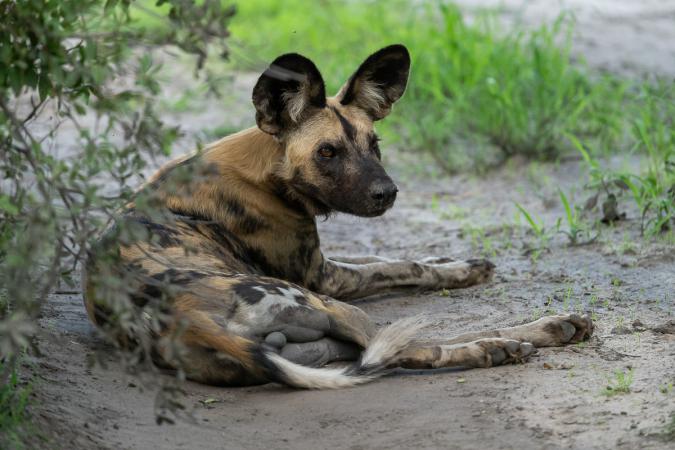
We see a car on the other side and other wild dogs in a grove. There are five of them, apparently. They eventually come out
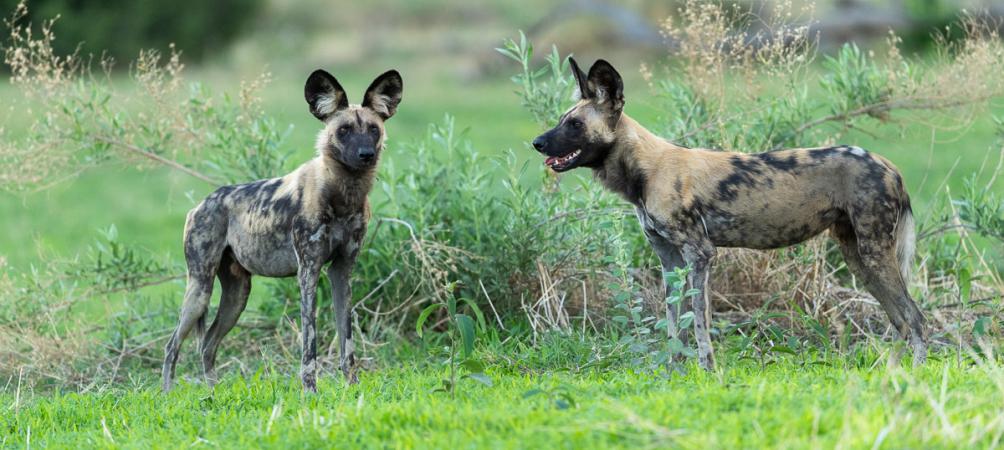
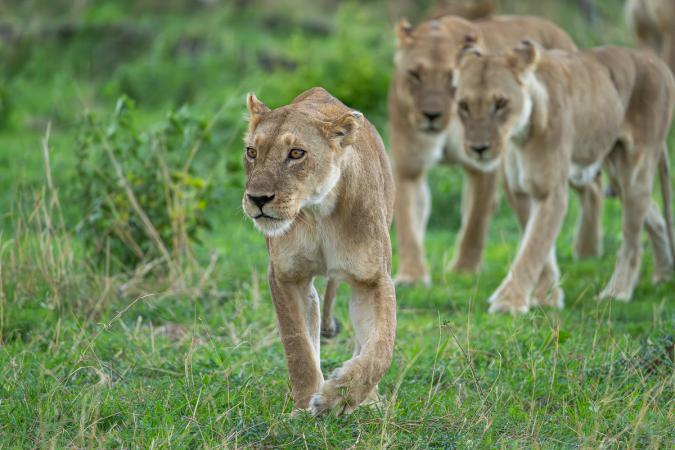
and we follow them for a while, but they move quickly. We let them slip away into the forest of dead trees. We then go to see lions. One male and several females and cubs.
.jpg?v=1kp1ffc)
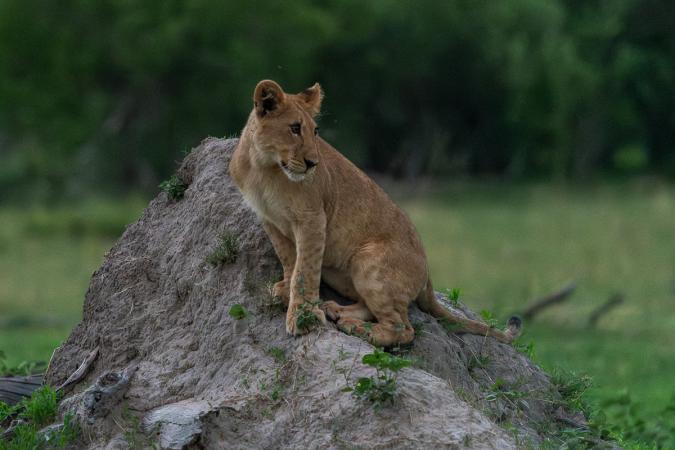
Normally, we were supposed to go on a night drive (a night safari to see animals that come out at night). But given how few animals we saw during the day, we doubt we'll see anything at night. Otherwise, we have to go back now to eat. It's 6:30 p.m., so we cancel and stay a while with the lions. They start to move, perhaps to go hunting. The younger ones follow a little further behind, as does the male. It's starting to get dark and we can't see much anymore.
We return to camp at 7:10 p.m. Campfire aperitif. Dinner of vegetable samosas, roast chicken, potatoes, zucchini, carrots, and strawberry pudding (similar to a clafoutis). Bedtime at 8:45 p.m. after packing our bags for tomorrow's “Moving Day.”
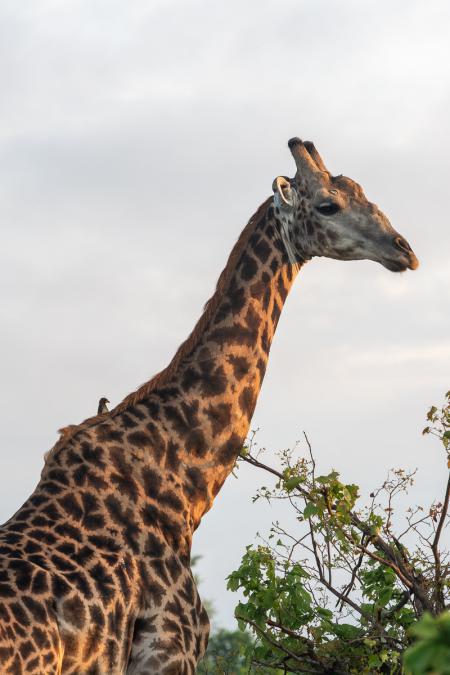
Wednseday november 12 : departure at 5:30 a.m. Today, we leave Khwai for Savuti. We encounter a giraffe.
We make another foray into Chobe Park and drive along the river. We pass by a pond where there are yellow-billed storks,
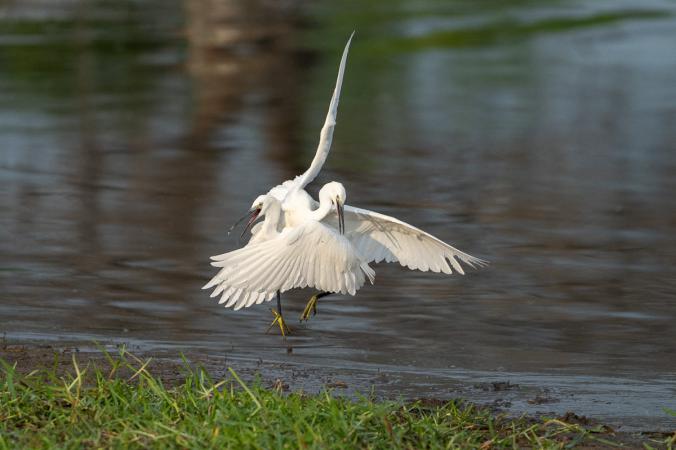
hippopotamuses, great egrets fighting,
spoonbill, little egret, hamerkop, curlew sandpiper, pied kingfisher. A little further on, we see a car stopped. And for good reason: there is a leopard lying on a fallen tree trunk. A female, apparently. Wow, so beautiful!
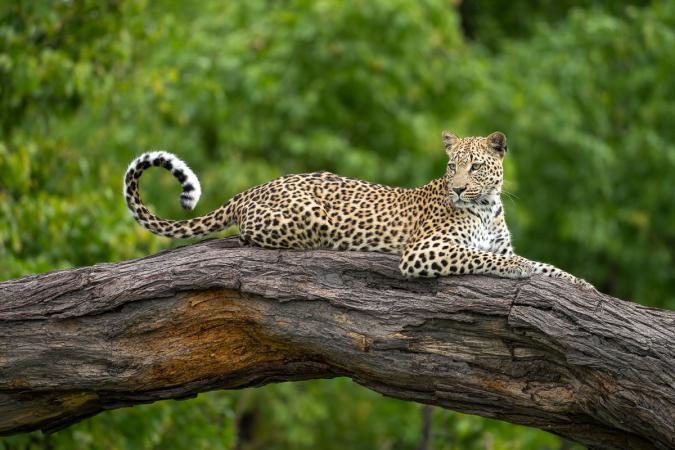
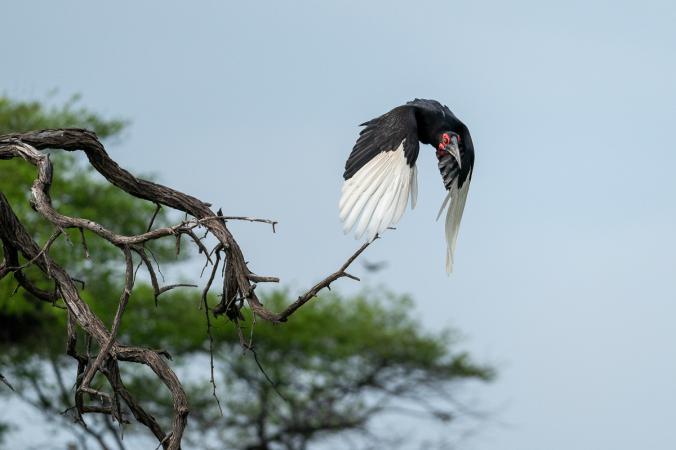
The perfect pose! After fifteen minutes, she lets out a grunt. Newman tells us that she is calling for a male. Then she climbs down from the tree trunk and disappears into the bush. We then see a southern ground hornbill.
Continuing on, we encounter yesterday's lions again in the bush. Not easy to photograph. We stop in front of an elephant drinking with its feet in the water.
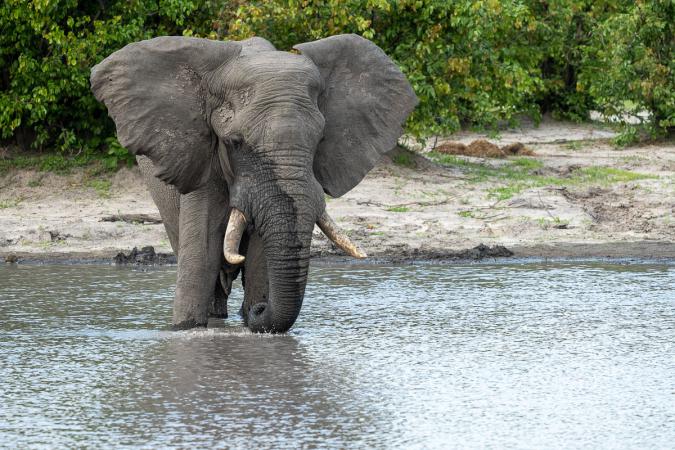
There is another one nearby in a kind of marsh. We settle down to have breakfast around 8:30 a.m. near the river. Sacred ibises, african woolly-necked storks in flight, and marabou storks are also there. Then rollers and vultures also show up.
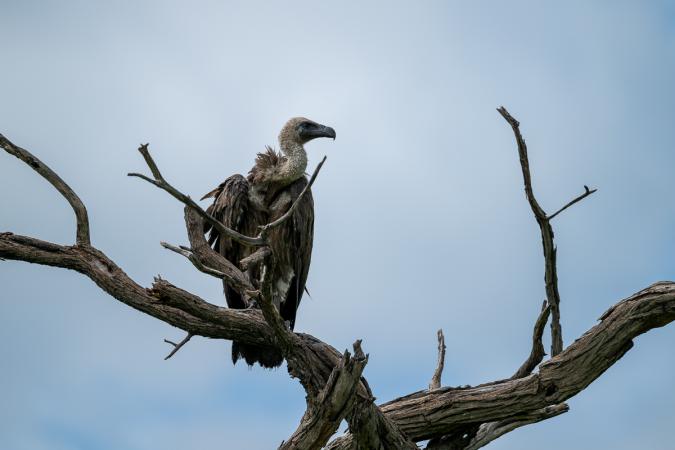
before arriving at Mababe Gate at 10:15 am.
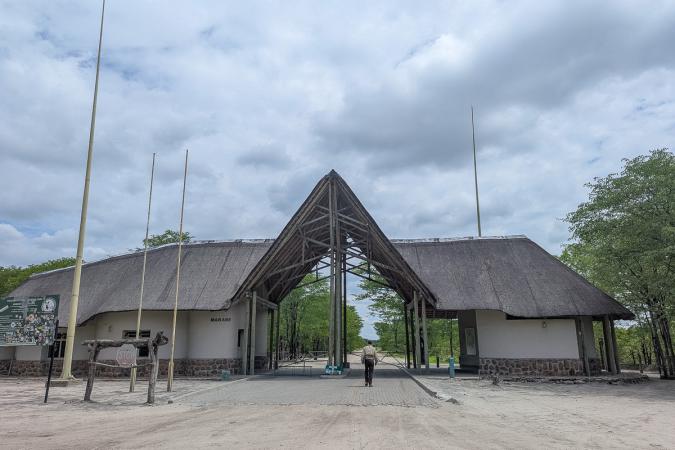
A quick break to fill out the entry paperwork, use the restroom, and we're off again. We are 66 km south of Savuti. We drive and drive... on the left, we see trees and shrubs, and on the right, a large flat, green (more or less) area, which is the Mababe Depression. There used to be an inland lake here. The Khwai River ends here. There can be large herds of elephants, oryx, and giraffes here. Water from Angola used to flow here, but not anymore. All that remains is a more or less swampy area with no trees. It's a place for cheetahs. We see a few elephants, a roller, and lots of ducks near a pool of water. We spot a warthog and a baby. The little one is funny!
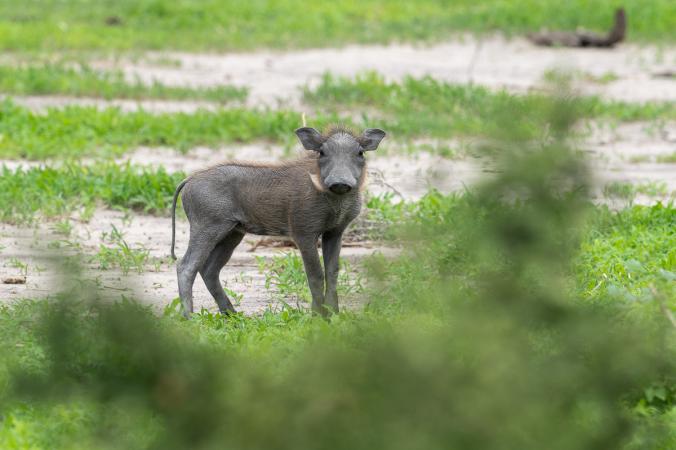
Normally, mothers have several young, but apparently only one remains; she has lost the others. Then impalas and a wildebeest wander by. We continue a little further and encounter wild dogs.
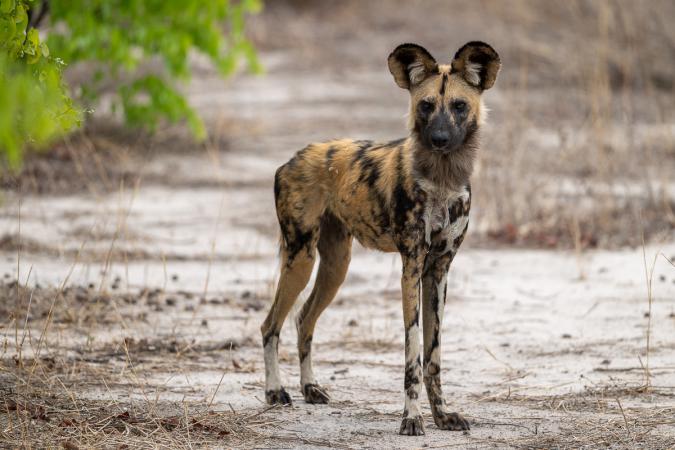
We're happy to see so many during this trip. There are a dozen here. But many are hidden in the bushes. The landscape changes all the time, here a slightly scorched golden savannah, but with a few green shrubs. A little further on, we encounter an oryx. I love it!
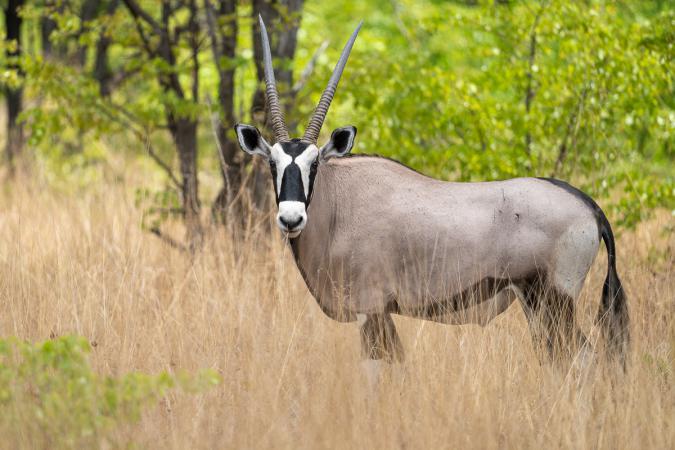
There aren't many around here. In a mini forest, two giraffe heads stick out. The landscape returns to lush green bush. On a narrow track, we narrowly avoid an accident with a vehicle coming at full speed around a bend. Newman yells at the locals. The bush thins out a little and is a little more scorched. The road is long, but luckily around 1:30 p.m., we stop at Marabout Pan for lunch under the only tree in this desolate place.
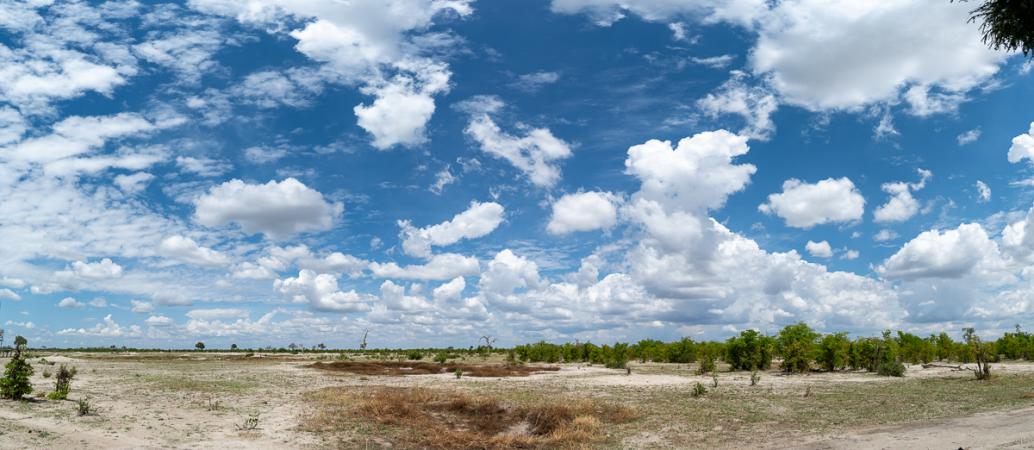
There is a watering hole for animals, but no animals. On the menu: potato salad with peas and corn, sausages, and cheese. It is very hot. We leave at 2:15 p.m. We drive around the pan. It reminds us of Etosha in Namibia. Now, there is nothing but golden savanna as far as the eye can see. A zebra wanders alone,
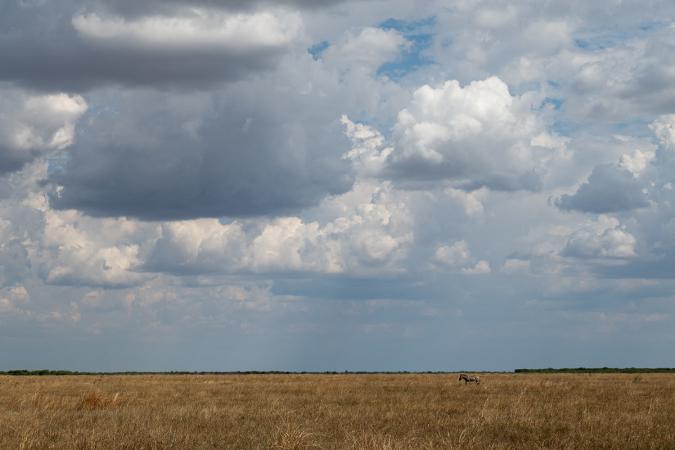
then a wildebeest.
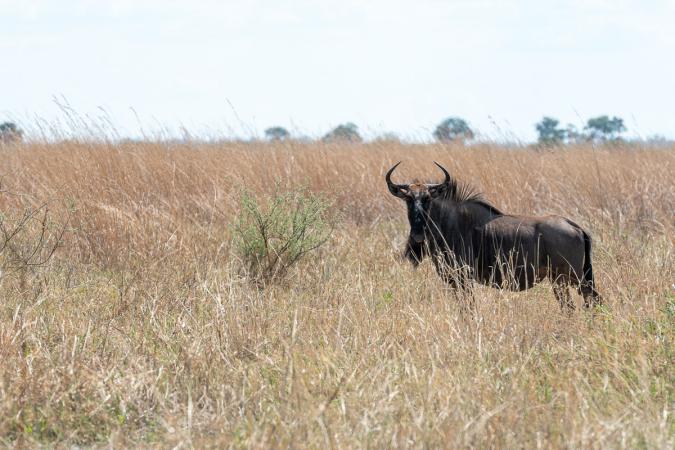
We move on to Chacal Pan, another watering hole for animals.
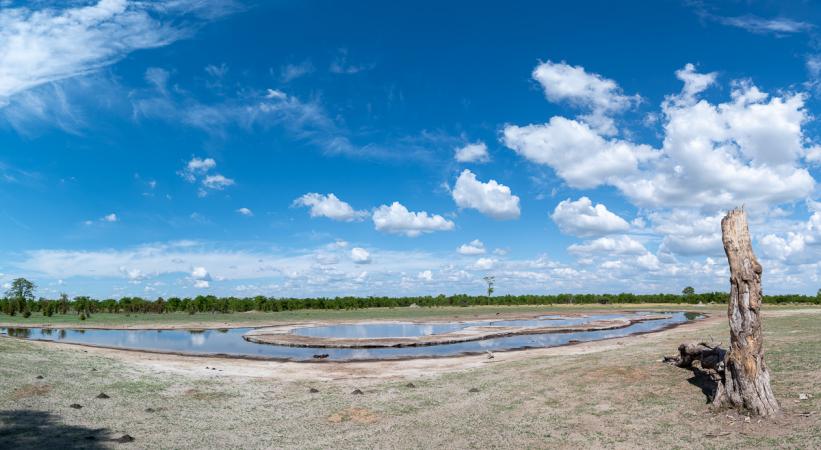
Well, obviously, they're not thirsty, and there's no one else around either. Just a cattle egret, standing with its feet in the water. We arrive at a sort of canyon, which is actually an old riverbed. It's quite sandy. There are trees and greenery. In fact, there's a bateleur,
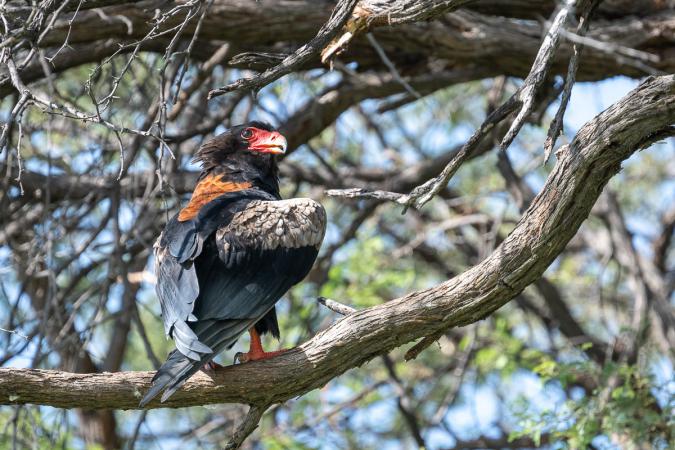
and a roller. On this sandy track, a couple has gotten their 4x4 stuck in the sand. Apparently, the 4x4 mode is no longer working, and they have been trying to get out of there for 30 minutes, in the intense heat. We attach a rope and pull them out with our car. They are incredibly relieved. We continue on and come across kudus and a steenbok. It's a tiny, cute little gazelle.
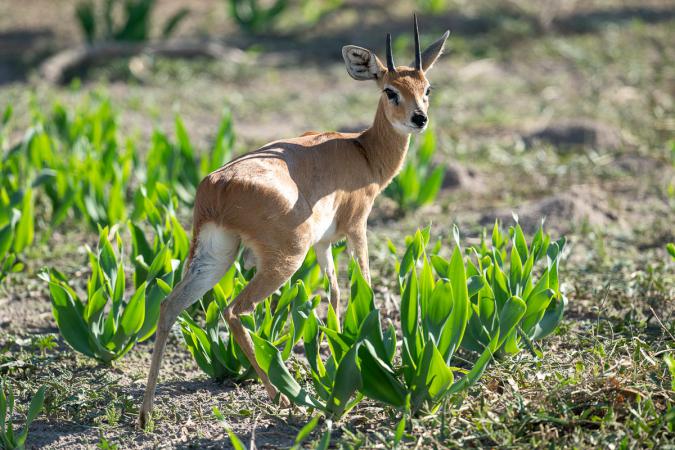
Finally, we arrive at the new camp in Savuti at 4:45 p.m. It is very sandy.
At the end of the afternoon, we have drinks by the fireplace, then dinner: broccoli soup, paella, and apple and raisin dessert with custard.
* * *
Khwai review :
* * *
Copyright Magali and David BELLEC